01Who this is for
- Developers building integrations for HighLevel benefit from automated OAuth handling, reducing authentication code.
- Agency engineers managing many client subaccounts gain centralized token storage and bulk install support.
- Tech leads at SaaS startups can use the SDK’s typed methods to avoid runtime errors while accessing the API.
02HighLevel SDKs, explained
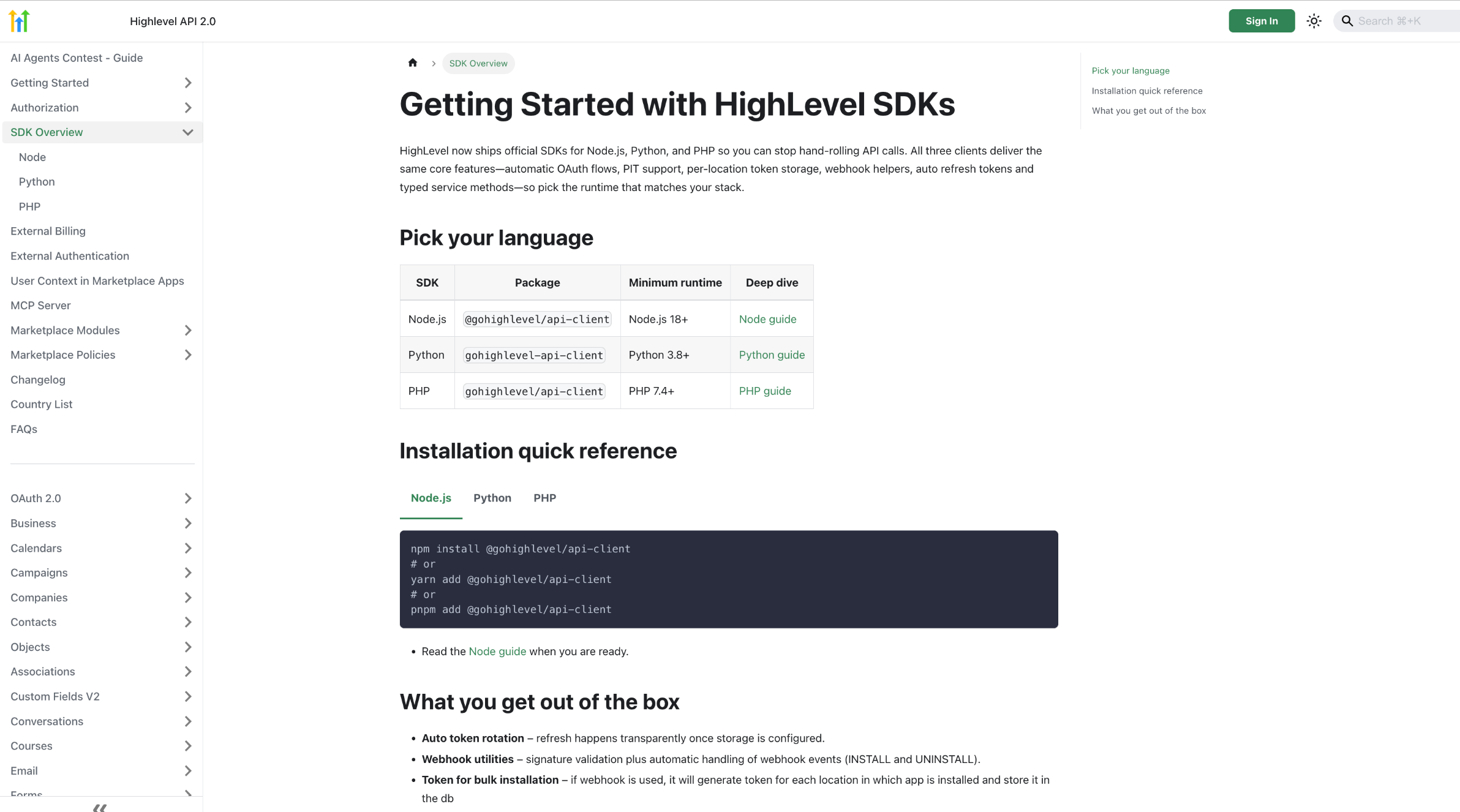
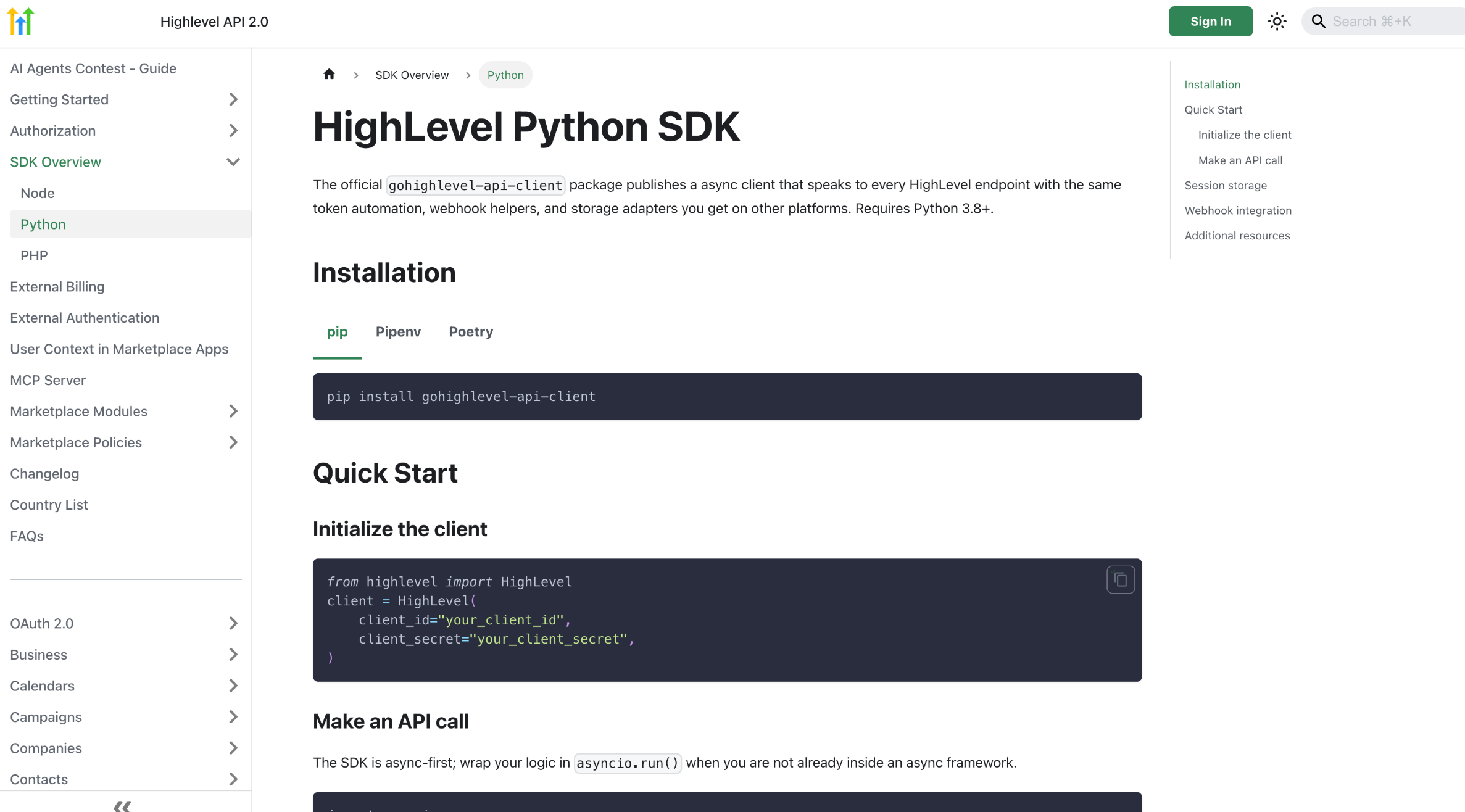
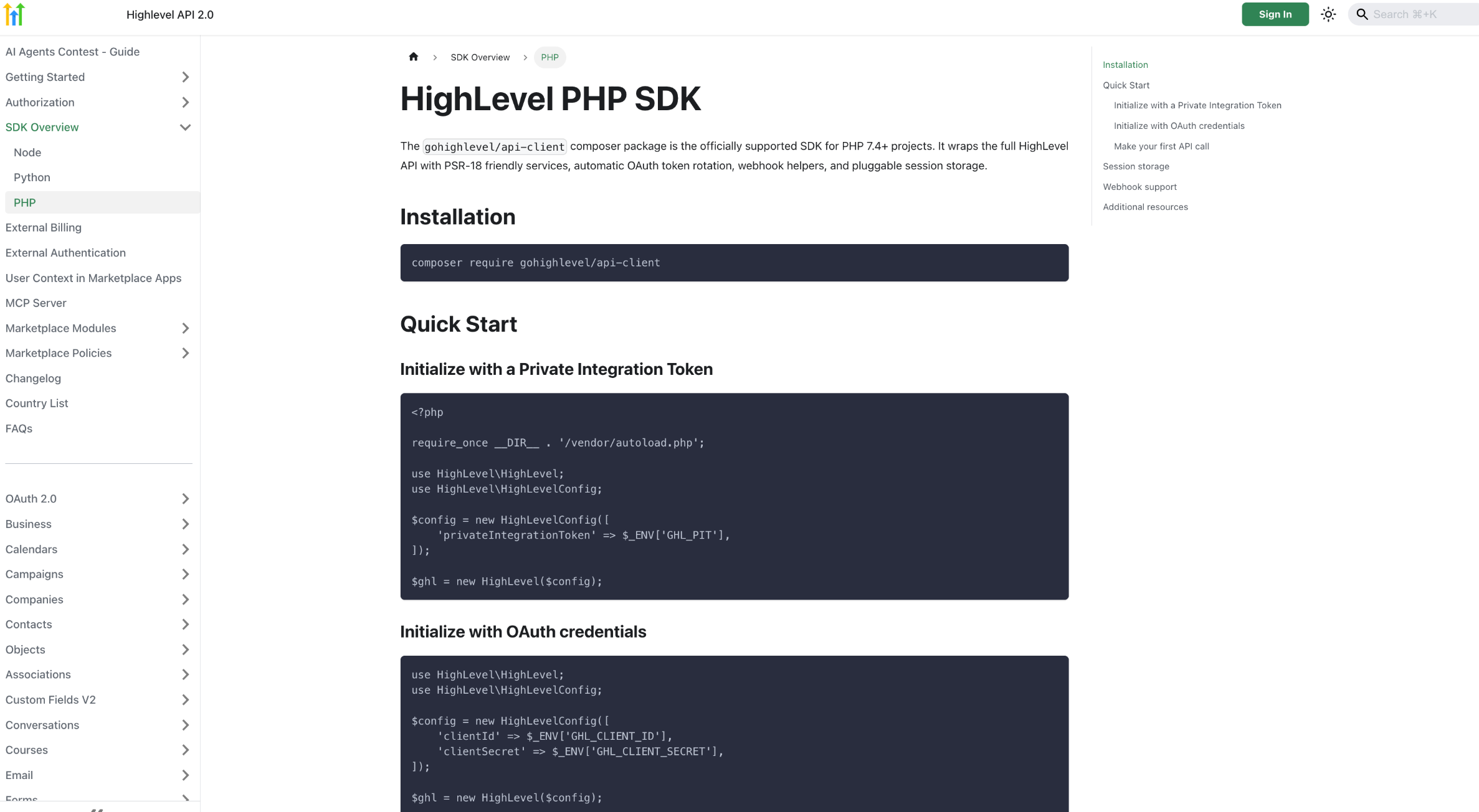
The SDKs are official libraries named gohighlevel/api client for PHP and gohighlevel api client for Python. They encapsulate every public endpoint of the v2 API and automatically manage the OAuth 2.0 lifecycle, including token exchange, silent refresh, and uninstall cleanup.
Token storage is abstracted through adapters that work with in memory caches, MongoDB, Redis, MySQL, PostgreSQL, or any custom class that implements the provided interface. This lets you keep tokens where your existing data lives.
Webhook helpers validate signatures and process INSTALL and UNINSTALL events, while typed service methods give compile time safety for API calls. The SDK code is regenerated from the OpenAPI spec on each platform release, keeping it current with a simple version update.
03How businesses use HighLevel SDKs
- Digital marketing agency. The agency adds the PHP SDK to its integration server, selects a MySQL storage adapter, and lets the client manage each client’s subaccount tokens automatically. API calls for campaign data are made through typed methods, eliminating manual request building.
- SaaS scheduling platform. The platform installs the Python SDK, configures a Redis adapter for fast token caching, and uses the webhook helper to receive INSTALL and UNINSTALL events from the marketplace. Each new tenant’s OAuth flow is handled without extra code.
- Custom reporting tool. The tool supplies a privateIntegrationToken to the SDK when OAuth is not required, then calls the typed service methods to retrieve analytics data from HighLevel’s API.
04The numbers and rules that matter
- One line OAuth 2.0 token exchange, storage, and refresh.
- Targets Public API v2 only.
05What it looks like in HighLevel
06Settings that matter
- privateIntegrationToken. When supplied, the SDK bypasses OAuth flows and uses the token directly for API calls.
07Things to know before you rely on it
- The SDK only supports the v2 Public API; v1 endpoints are not covered.
- Future auto installs for newly created subaccounts are mentioned as a planned capability.
- Updates follow semantic versioning; a major version bump may introduce breaking changes that require code adjustments.
08How it connects to the rest of HighLevel
- Learn about OAuth consent requirements for marketplace apps OAuth consent
- Explore MultiOAuth support for marketplace apps MultiOAuth
- Understand automated webhook retries in the marketplace Webhook retries
Michael's take

If you are only doing manual API calls or don’t need OAuth automation, you can skip this feature.