
01Who this is for
- Founders of SaaS businesses who need immediate updates to keep their billing engines aligned with new offerings.
- Product managers responsible for tracking plan adoption trends in real time.
- Developers building custom integrations that must react to each plan launch.
02New SaaS plan created webhooks, explained
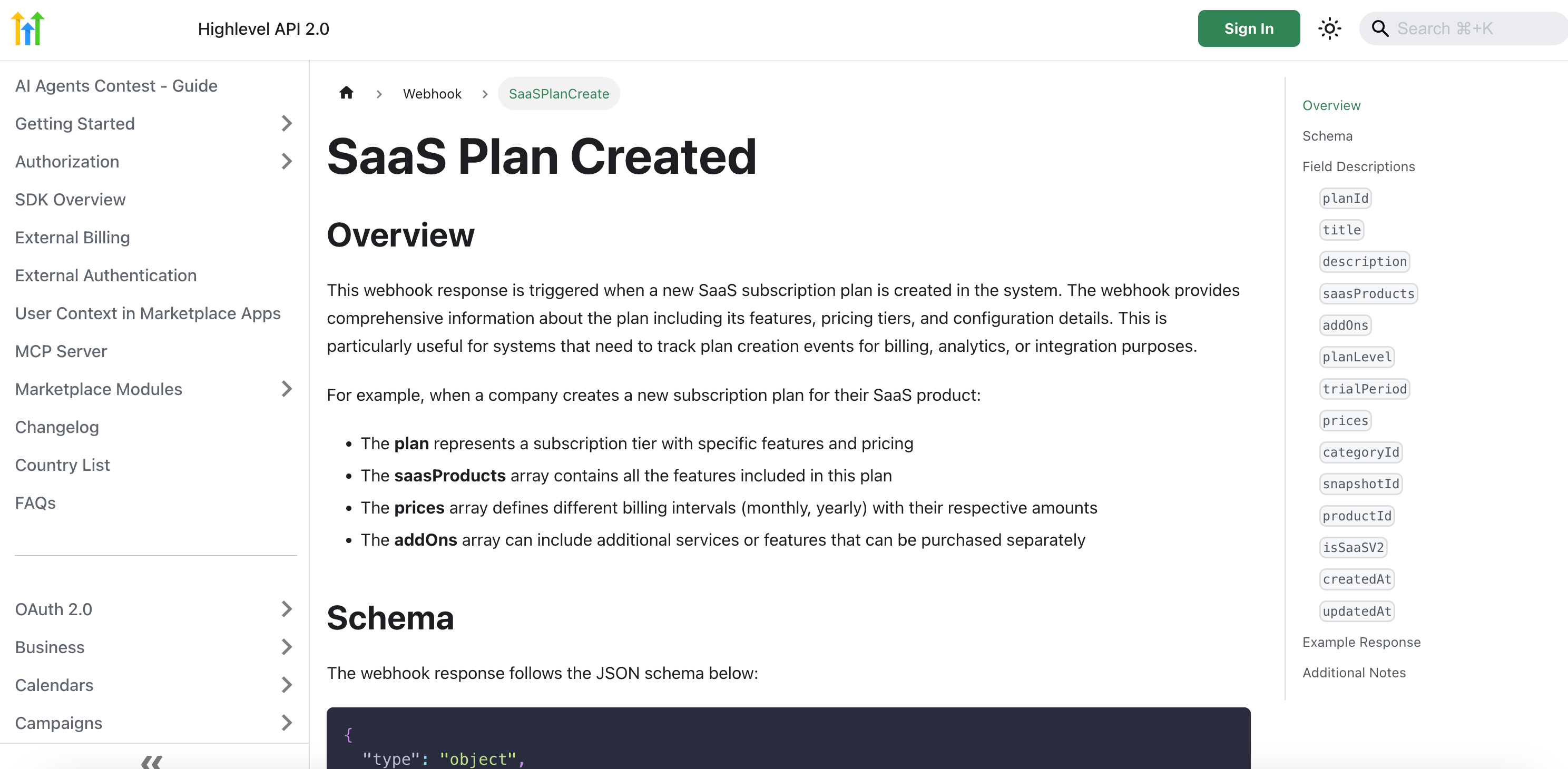
When a new SaaS plan is added inside HighLevel, the webhook triggers automatically. It posts a JSON payload to the URL you define, containing the plan’s identifier, name, feature list, price options and any optional add ons. The payload format matches the data returned by the GET /plans endpoint, so parsing logic can be reused.
The endpoint for the webhook follows the pattern https://services.leadconnectorhq.com/saas/agency plans/:companyId. Each request includes an HMAC SHA256 signature in the X HighLevel Signature header, which you validate using the secret key you generated. This ensures that only authentic notifications are processed.
03How businesses use New SaaS plan created webhook
- Billing platform provider. Configure the webhook URL in HighLevel. When a plan appears, the payload arrives with pricing tiers, allowing the billing system to create matching subscription options automatically.
- Data analytics firm. Set the webhook to deliver plan data to your analytics pipeline. The incoming JSON contains metadata and feature flags, enabling immediate tracking of plan launch frequency.
- Custom workflow builder. Create a custom workflow that receives the webhook, extracts the add ons array, and forwards the information to a third party CRM for record keeping.
04The numbers and rules that matter
- Rate limit: 100 requests per minute per company.
- Retries: Up to three times with exponential backoff for non 2xx responses.
- Payload version: V1 (future versions change endpoint path, e.g., /v2/agency plans).
- Signature header: X HighLevel Signature using HMAC SHA256.
05What it looks like in HighLevel
06Settings that matter
- X HighLevel Signature header. Contains an HMAC SHA256 hash of the payload that you verify with your secret key to confirm the request’s authenticity.
- schemaVersion field. Indicates the version of the payload structure so your parser can adapt when HighLevel releases a new format.
07Things to know before you rely on it
- The webhook can be sent up to 100 requests per minute for each company.
- If a delivery fails, HighLevel will retry up to three attempts with exponential backoff.
- Future payload versions will appear under a new path such as /v2/agency plans; watch the schemaVersion field for changes.
08If something goes wrong
- Endpoint returns HTTP 500. HighLevel will automatically retry three times with exponential backoff. Ensure your handler is idempotent to avoid duplicate processing.
- No data arrives after creating a plan. Create a test plan and confirm the webhook URL is reachable and that the X HighLevel Signature is being validated correctly.
09How it connects to the rest of HighLevel
- All SaaS Configurator features SaaS features overview
- HighLevel pricing and plans Pricing page
- Start a 30 day HighLevel trial Free trial
Michael's take

Most people assume the webhook will automatically keep their billing system in sync without any further work. In reality, you need a listener that validates the signature, parses the payload and updates your catalog, otherwise you’ll miss the new plan data.
I would set up a simple endpoint that logs the incoming payload, checks the X HighLevel Signature and then calls the billing API to add the plan. Running a test creation right after the setup confirms everything is wired correctly before you rely on it for production data.