
Home/HighLevel/Agency/Proposals and contracts
GoHighLevel agency · Proposals
Agency proposals and contracts. Clear scope, fewer surprises.
A good proposal makes the decision easy. A good contract makes the relationship easy. Both should say exactly what you will do, what the client will do and what happens if things change.
The short answer
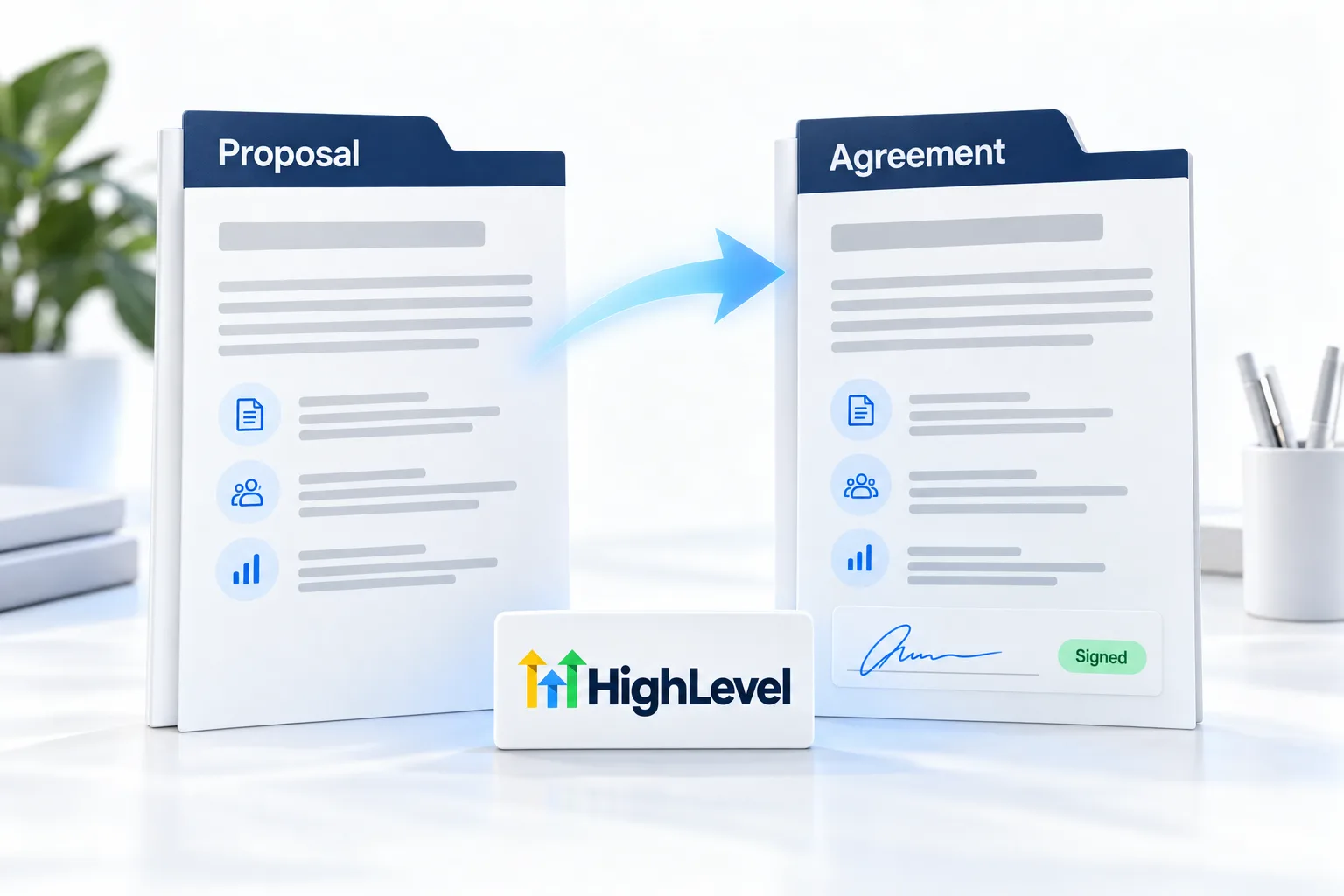
An agency proposal should cover the problem, the system, the scope, the timeline, the price and the next step, while the contract adds responsibilities on both sides, usage billing, consent and compliance duties, term and cancellation, data ownership and limits of liability. GoHighLevel can send both for electronic signature.
Michael is a sponsored HighLevel affiliate. Links to HighLevel use his partner link at no extra cost to you. HighLevel prices and product facts on this page come from HighLevel's own pricing page and help center, checked on the date above.
Proposal
What are the six sections of an agency proposal?
- The problem, in the client's words.
- The system you will build.
- What is in scope, and what is not.
- The timeline to launch.
- The price: setup, monthly and usage.
- The next step to start.
Contract
What terms should an agency contract include?
- Services and scope
- Fees, billing dates and usage charges
- Client responsibilities, such as access and approvals
- Consent and compliance: who is responsible for contacting only consenting people
- Term, renewal and cancellation notice
- Who owns the data and the account
- Confidentiality
- Limits of liability
Send
How do you send and sign in HighLevel?
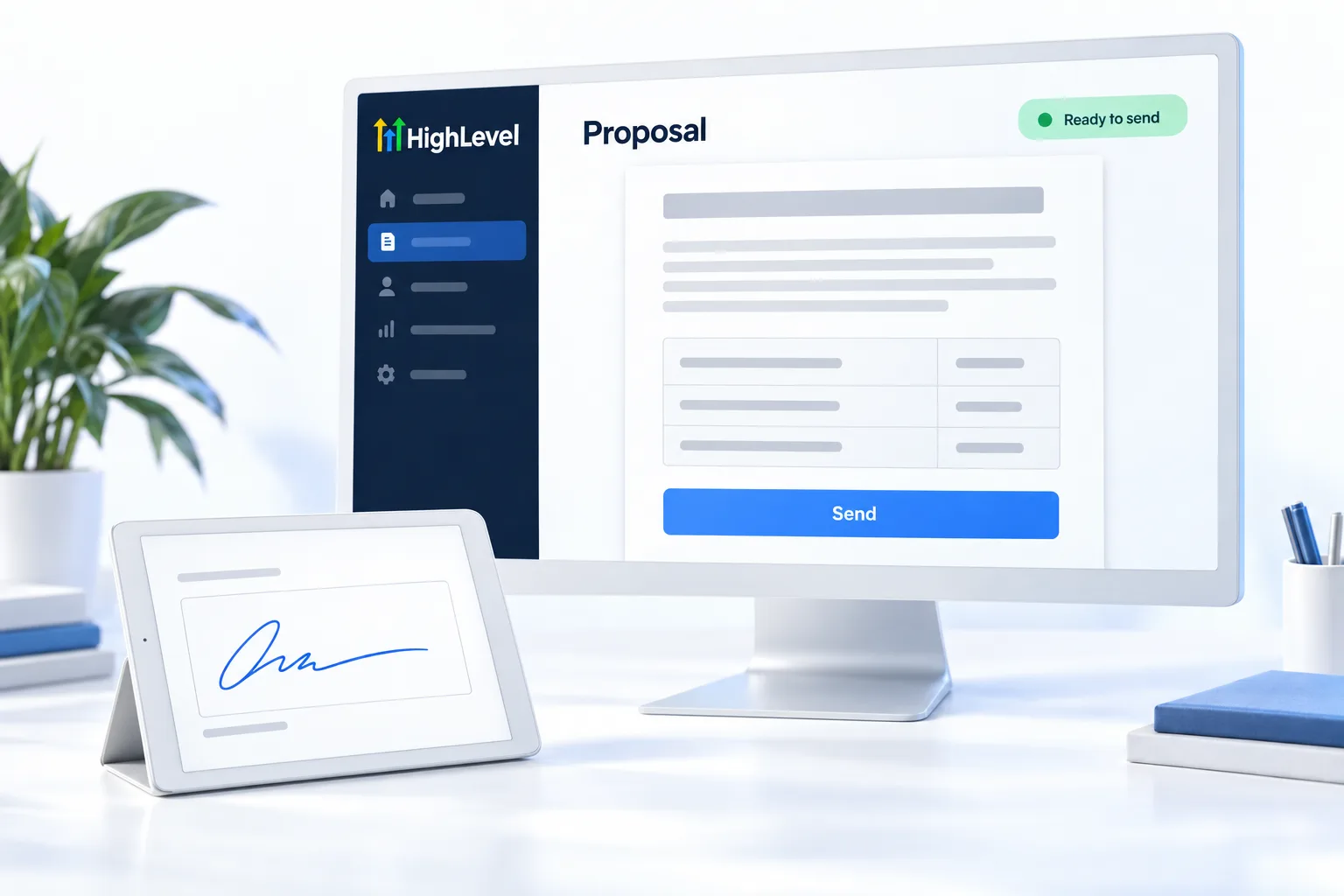
Use HighLevel documents and contracts to send proposals and collect signatures, then trigger onboarding when it is signed. The agency guide shows where this fits in the full path.
Difference
What is the difference between a proposal and a contract?
A proposal sells. A contract protects. New agencies often blur the two and end up with a ten page document that does neither job well.
The proposal is short and written for the owner. It repeats the problem in the words they used on the call, shows the system, and states the price. Its job is to make yes an easy answer. One page is often enough, two at most.
The contract is the agreement behind it. It can be longer, because its job is to answer the awkward questions before they come up. What happens if a payment fails. Who is responsible for consent. What the client keeps if they leave. You can send both together: the proposal on top, the terms underneath, one signature for both.
| Document | Written for | Answers |
|---|---|---|
| Proposal | The owner making the decision | What will you do, by when, for how much? |
| Contract | Both sides, later | What happens when something changes or goes wrong? |
Scope
How do you write scope so it prevents disputes?
Most client disputes are not about bad work. They are about work the client assumed was included. So scope needs two lists, and the second one matters more.
The first list is what you will deliver, in concrete terms. One AI receptionist on one phone number. One booking calendar. One review request workflow. Monthly tuning and one monthly report.
The second list is what is not included. Paid advertising. Website redesign. Extra phone numbers. Content writing. Anything not on the first list is quoted separately. Add a line about revisions too: how many rounds are included at launch, and how changes are handled after that.
Then cover usage. State that calls, texts, email and AI usage are billed separately from your fee, and how. On HighLevel, the Unlimited plan can rebill phone and email at cost, and the Founder Plan can add a markup. Either way, the client should read about it in the contract before they see it on an invoice. The pricing your services page covers how to set the three parts of the price.
Next
What should happen right after the client signs?
The minutes after a signature are when a client is most confident in the decision. Use them. In GoHighLevel, a won opportunity or a paid invoice can trigger a workflow, so the welcome message, the intake form and the kickoff booking link go out without you touching anything.
- The client signs and pays the setup fee.
- The opportunity moves to won in your pipeline.
- The onboarding workflow sends the welcome email and text.
- The intake form collects legal business details for A2P, access and branding.
- The kickoff call is booked from the link in the welcome message.
The build steps are on build a client onboarding workflow, and the full first week is on client onboarding system. Keep the signed copy and the payment record together. If a question comes up in month six, you want to find the answer in one place.
Usage billing terms depend on your plan. GoHighLevel plans compared shows which plans rebill at cost and which allow markup, the Founder Plan, formerly Agency Pro page covers the top plan, and HighLevel Founder Plan explained explains who it is for. If a prospect asks whether the platform justifies the fee, is GoHighLevel worth it gives an honest answer you can share. To try Documents and Contracts yourself, start the GoHighLevel 30 day trial through Michael's link.
For the feature itself, read the guide to GoHighLevel Documents and Contracts.

Write down what is not included. That one line prevents most client disputes.
Questions
Common questions.
What goes in an agency proposal?
An agency proposal has six sections: the problem in the client's words, the system you will build, the scope, the timeline, the price and the next step. Keep it to a page or two. The client should be able to read it in a few minutes and know exactly what they are agreeing to.
What should a contract cover?
A contract should cover scope, fees and how usage is billed, the responsibilities of both sides, consent and compliance duties, the term and how to cancel, who owns the data and limits of liability. Use the same template for every client and have a lawyer review it before you send the first one.
Can HighLevel collect signatures?
Yes. HighLevel's Documents and Contracts feature lets you build a proposal or contract, send it to the client and collect an electronic signature. The agreement then sits in the same CRM as the conversation and the invoice, so you are not chasing signed files across email and separate tools.
Who is responsible for consent?
Spell it out in the contract. Usually the client confirms they have consent for the contacts they provide, and the agency agrees to build systems that honor opt outs and messaging rules. Writing this down protects both sides, and a lawyer should review the wording for the places you operate.
Should the proposal and contract be one document?
They can be. A one page proposal on top and the terms below, with one signature covering both, keeps it simple. Keep the terms identical for every client, so the only part you rewrite each time is the proposal on top.
How long should an agency contract term be?
That is a business decision. State the term, how it renews and how much notice is needed to cancel, and have a lawyer review it. Whatever you choose, make the first invoice and the start date clear in the same document.
What should I list as out of scope?
Anything you do not intend to deliver for the fee, such as ad management, website redesign, extra phone numbers and content writing. A short list of exclusions prevents most scope arguments, and each item can become a paid extra later.
Next step
See it in your own account. Thirty days, every feature.
Start a trial, build the first system and test it before the first invoice. Usage fees for phone, SMS, email and AI can apply during the trial.
HighLevel has three plans at a flat monthly price, each with unlimited users and contacts. See what each one includes and what it costs.
Compare the PlansStarter, Unlimited and Founder