
Home/HighLevel/Agency/Sales process
Agency · Sales
The agency sales process. Diagnose, demo, decide.
A good sales call feels like a doctor's visit, not a pitch. You ask questions, find the costly problem, show how your system fixes it, and make it easy to say yes or no. GoHighLevel can run the booking, reminders and follow up around it.
The short answer
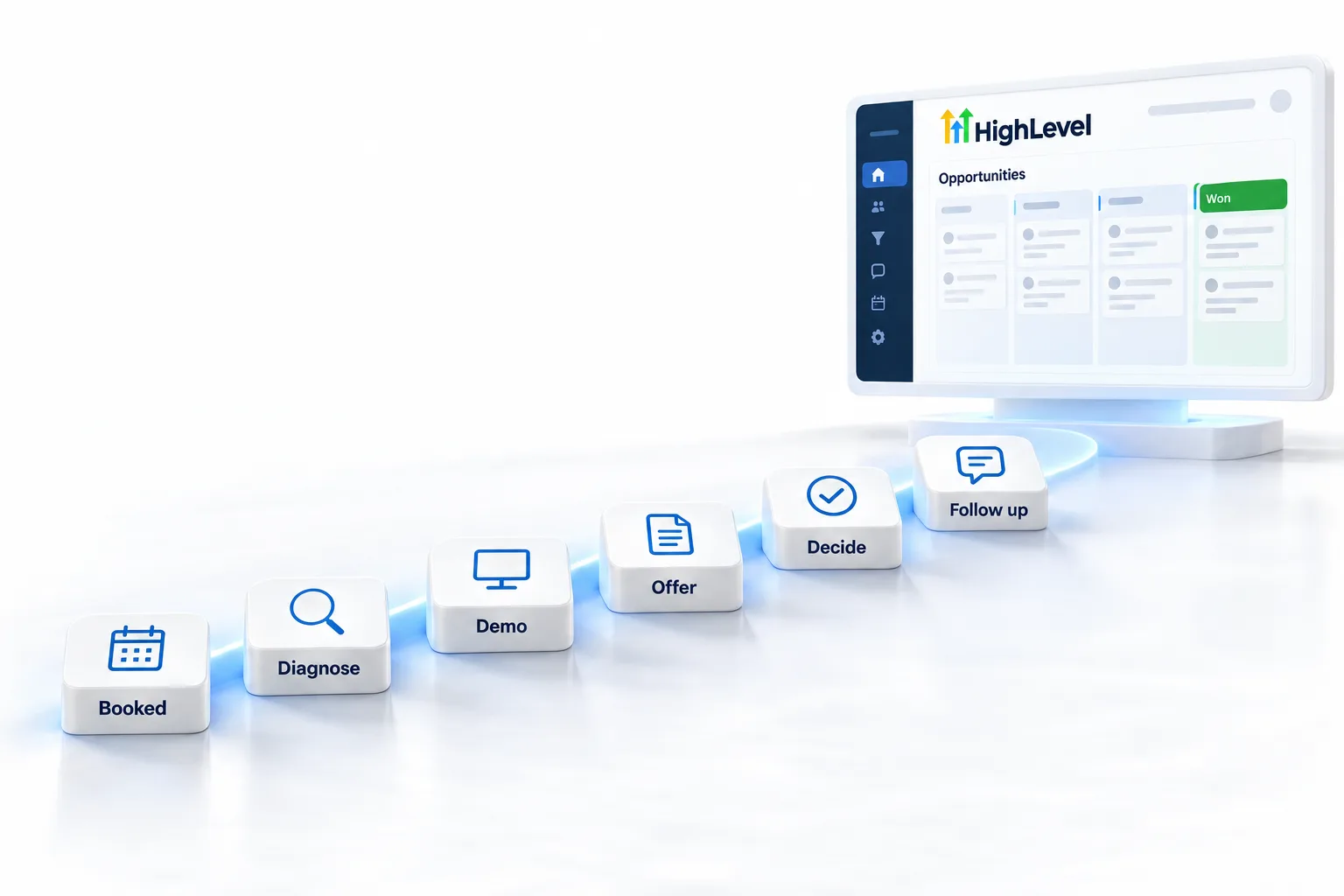
Run agency sales calls in five stages: diagnose the problem with questions, quantify what it costs, demo the system live, present one offer with clear pricing and ask for a decision. Use HighLevel to book calls, send reminders, track the deal in a pipeline and follow up automatically if they need time.
Michael is a sponsored HighLevel affiliate. Links to HighLevel use his partner link at no extra cost to you. HighLevel prices and product facts on this page come from HighLevel's own pricing page and help center, checked on the date above.
The call
What are the five stages of an agency sales call?
- Diagnose: ask how they handle leads and calls today.
- Quantify: ask what a lost customer costs them.
- Demo: show the system live, ideally on their own scenario.
- Offer: present one package with setup and monthly pricing.
- Decide: ask directly, and agree the next step either way.
Around the call
What can HighLevel run around the sales call?
- Booking funnel with qualifying questions
- Confirmation and reminder texts
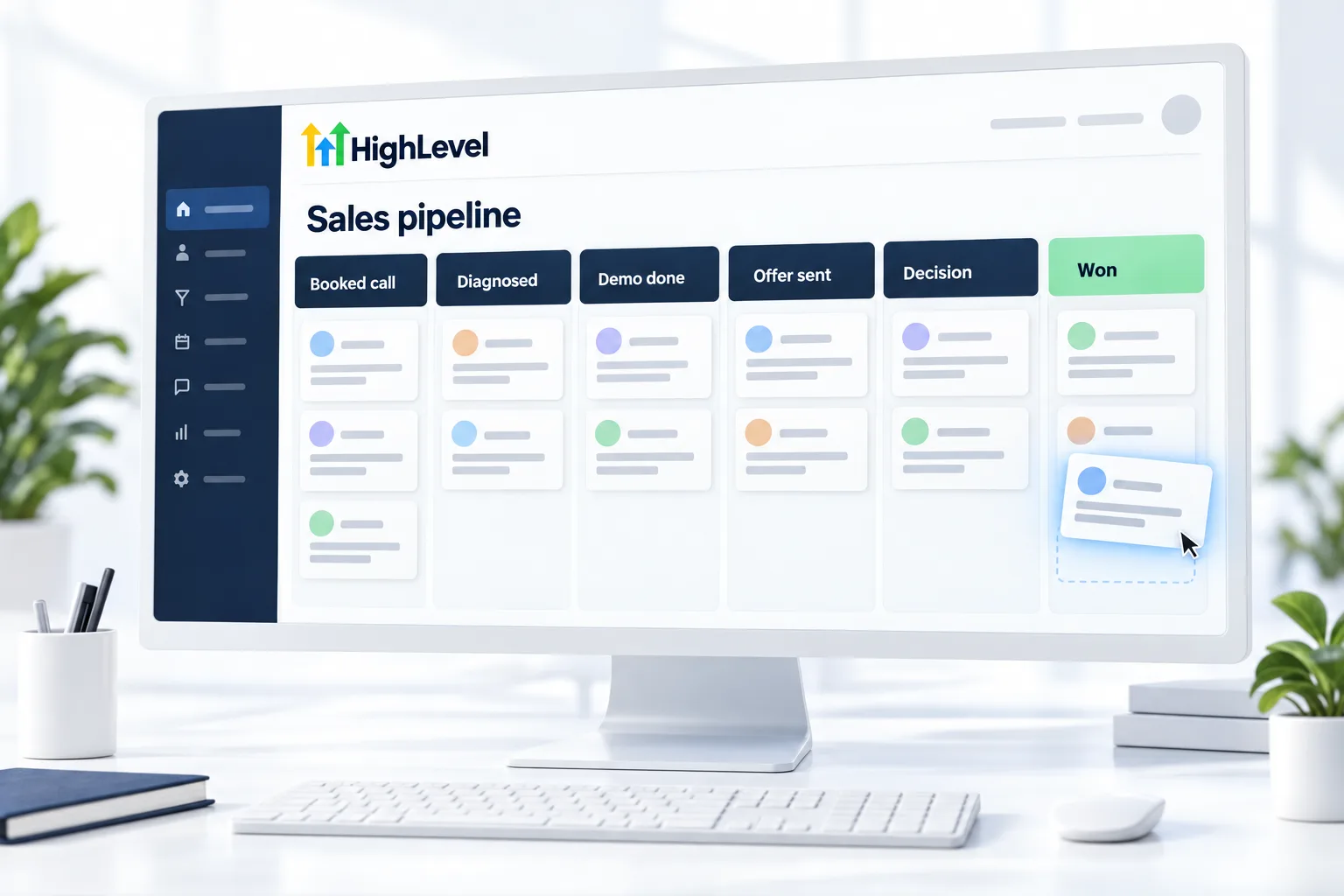
- Pipeline stages from booked to won
- Proposal sent from the CRM
- Follow up workflow if they need time
Honesty
When should you say no to a prospect?
If your system will not help them, say so. You keep your reputation and often get a referral to someone it will help.
Questions
Which questions should you ask on a discovery call?
The diagnose stage is most of the call. Good questions do two jobs. They tell you whether your system fits, and they let the owner hear their own problem described in their own words.
- What happens right now when someone calls and nobody can pick up?
- How fast does a new website lead usually get a reply?
- Who follows up with people who asked for a quote and went quiet?
- How do you ask customers for reviews today?
- What have you already tried, and what happened?
- If this were fixed three months from now, what would be different?
Write the answers down as they speak. You will use their exact phrases in the proposal, and the numbers they give you become the starting point for pricing. Resist the urge to explain your system while they are still describing the problem. The demo comes later, and it lands better when they have finished.
Demo
How do you demo the system and handle objections honestly?
Keep the demo short and specific to what they just told you. If they said missed calls, have them call your demo number and let the AI receptionist answer. If they said slow follow up, submit a form on your demo page and let them watch the text arrive. A working system on their own phone is more convincing than slides. The GoHighLevel demo page shows what a live walk through can cover.
Then present one offer, with the setup fee, the monthly fee and how usage is billed. Stop talking after the price. The silence is theirs to fill.
Objections are usually questions in disguise, so answer them plainly.
| They say | What it usually means | An honest answer |
|---|---|---|
| It is too expensive | I do not see the value yet | Go back to the cost of the problem in their numbers |
| I need to think about it | Something is unclear | Ask what they would want to know before deciding |
| We tried something like this | They were burned before | Ask what went wrong and say how yours differs, or that it does not |
| Can you guarantee results | They want to reduce risk | Promise what you control, such as delivery dates, not revenue |
Follow up
How should you follow up after the call?
Most decisions are not made on the call, and that is fine. What matters is that the next step has a date. Before you hang up, agree when you will speak again and put it in the calendar while they are still on the line.
Then let the system do the routine part. In HighLevel, move the opportunity to a proposal sent stage in your sales pipeline and let a short workflow send the proposal, a reminder a couple of days later, and a final check in. Add one personal message of your own that mentions something specific from the conversation. Two or three touches is enough. After that, close the loop politely and move the deal to lost with a reason, so you can see patterns later.
Review those reasons every month. If the same objection keeps appearing, the problem is upstream: the core offer is unclear, the niche cannot afford it, or the demo does not show the result. When the call does end in a yes, the next step is on proposals and contracts.
Hearing no is part of the job, and the video on handling rejection in sales conversations covers how to take it. The GoHighLevel agency path shows where the sales process sits between your offer and onboarding.
What you can sell depends partly on your plan. HighLevel Founder Plan explained and the Founder Plan, formerly Agency Pro page explain the top plan, and the GoHighLevel 30 day trial through Michael's link gives you time to build the demo you will show on calls.

Talk less than half the call. The client's words are your best sales script.
Questions
Common questions.
How do I run an agency sales call?
Run an agency sales call in five stages: diagnose the problem with questions, quantify what it costs the business, demo the system live, present one offer with clear pricing and ask for a decision. Spend most of the call on the prospect's problem. The demo and the offer are short once the problem is clear.
Should I send a proposal first?
Usually after the call, so it reflects what you learned. A proposal sent before you understand the problem is a guess, and it invites a price comparison instead of a conversation. Diagnose first, agree the outline on the call, then send a short proposal the same day while it is fresh.
How do I follow up?
Follow up with a short automated sequence plus a personal message. The automation sends the recap and a couple of reminders, so nothing depends on your memory. The personal message refers to something specific from the call. Stop after a few attempts and leave the door open, so the prospect can come back later.
What if they say no?
Ask why, thank them and ask if anyone else might benefit. The reason tells you whether the problem was price, timing, trust or fit, and that improves the next call. Record it in your pipeline. A no handled politely can become a referral or a yes a few months later.
How long should an agency sales call be?
Long enough to diagnose, demo and decide. Keep the demo short and spend most of the time on the prospect's own problem. If time runs out before the decision, book a second call instead of rushing the prospect through the offer.
What do I say when a prospect asks for a guarantee?
Promise what you control, such as delivery dates and response times. Do not promise revenue or a number of new customers. You can also offer a short paid pilot, which limits the risk for the client without a promise you cannot keep.
Should I track lost deals?
Yes. Record a reason for every lost deal in your pipeline and review the reasons monthly to spot patterns. When the same reason keeps appearing, change the offer, the price or the kind of business you are calling, and see whether the next month looks different.
Next step
See it in your own account. Thirty days, every feature.
Start a trial, build the first system and test it before the first invoice. Usage fees for phone, SMS, email and AI can apply during the trial.
HighLevel has three plans at a flat monthly price, each with unlimited users and contacts. See what each one includes and what it costs.
Compare the PlansStarter, Unlimited and Founder