
Home/HighLevel/Agency/Legal basics
GoHighLevel agency · Legal
Agency legal basics. Protect the business before it grows.
Legal work is not exciting, but a few basics protect you from the problems that end agencies: unclear contracts, messaging violations and mishandled data. This is a checklist to take to a professional, not legal advice.
The short answer
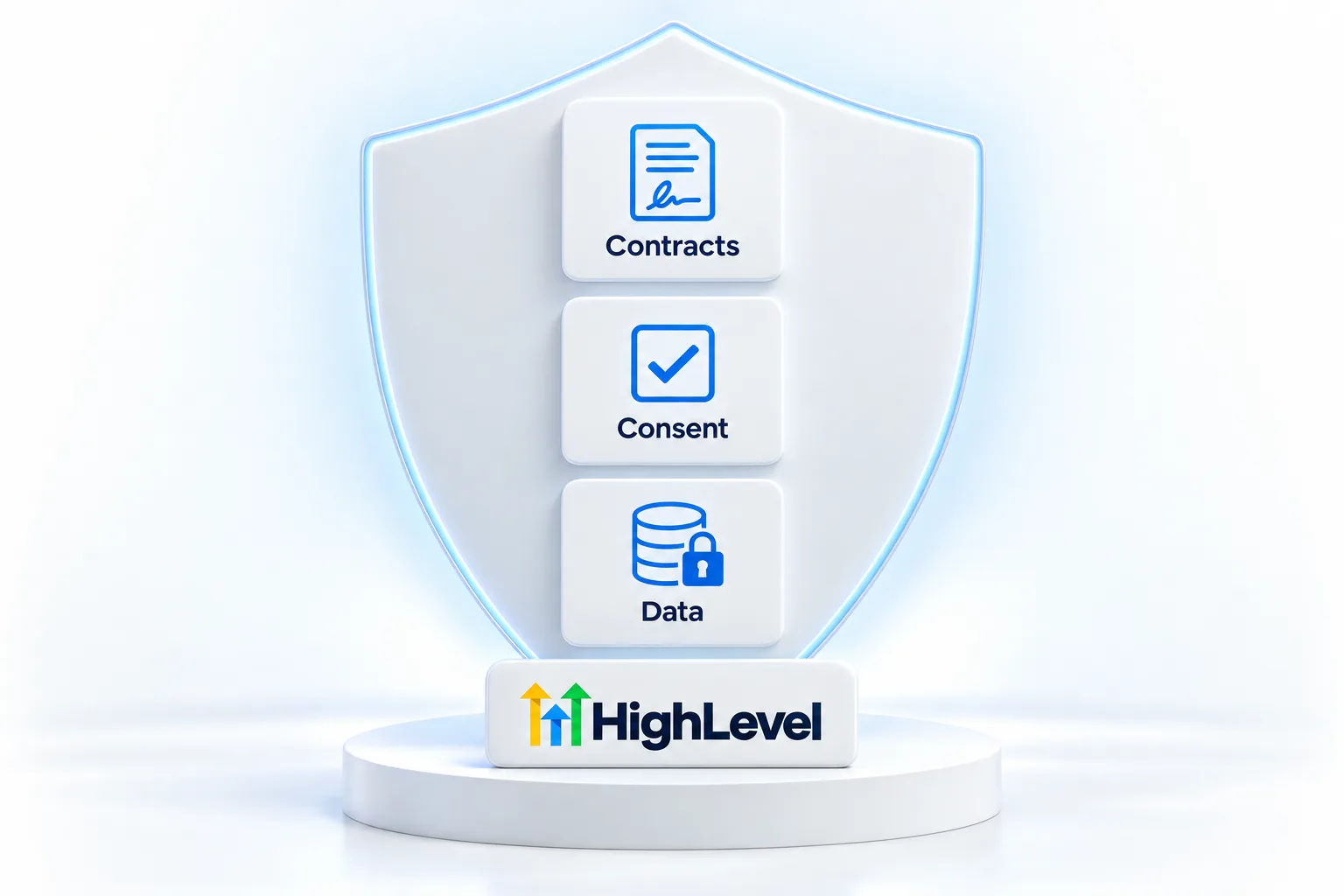
Cover seven legal basics: a proper business entity, a client contract with clear scope, consent and messaging rules (A2P, TCPA, opt outs), privacy and data handling, HIPAA if you serve healthcare (HighLevel's HIPAA upgrade is $297 a month and cannot be turned off once enabled), business insurance and record keeping. Have a lawyer review it.
Michael is a sponsored HighLevel affiliate. Links to HighLevel use his partner link at no extra cost to you. HighLevel prices and product facts on this page come from HighLevel's own pricing page and help center, checked on the date above.
Checklist
What are the seven legal basics for an agency?
- Form a business entity and separate business finances.
- Use a client contract with scope, fees, responsibilities and cancellation terms.
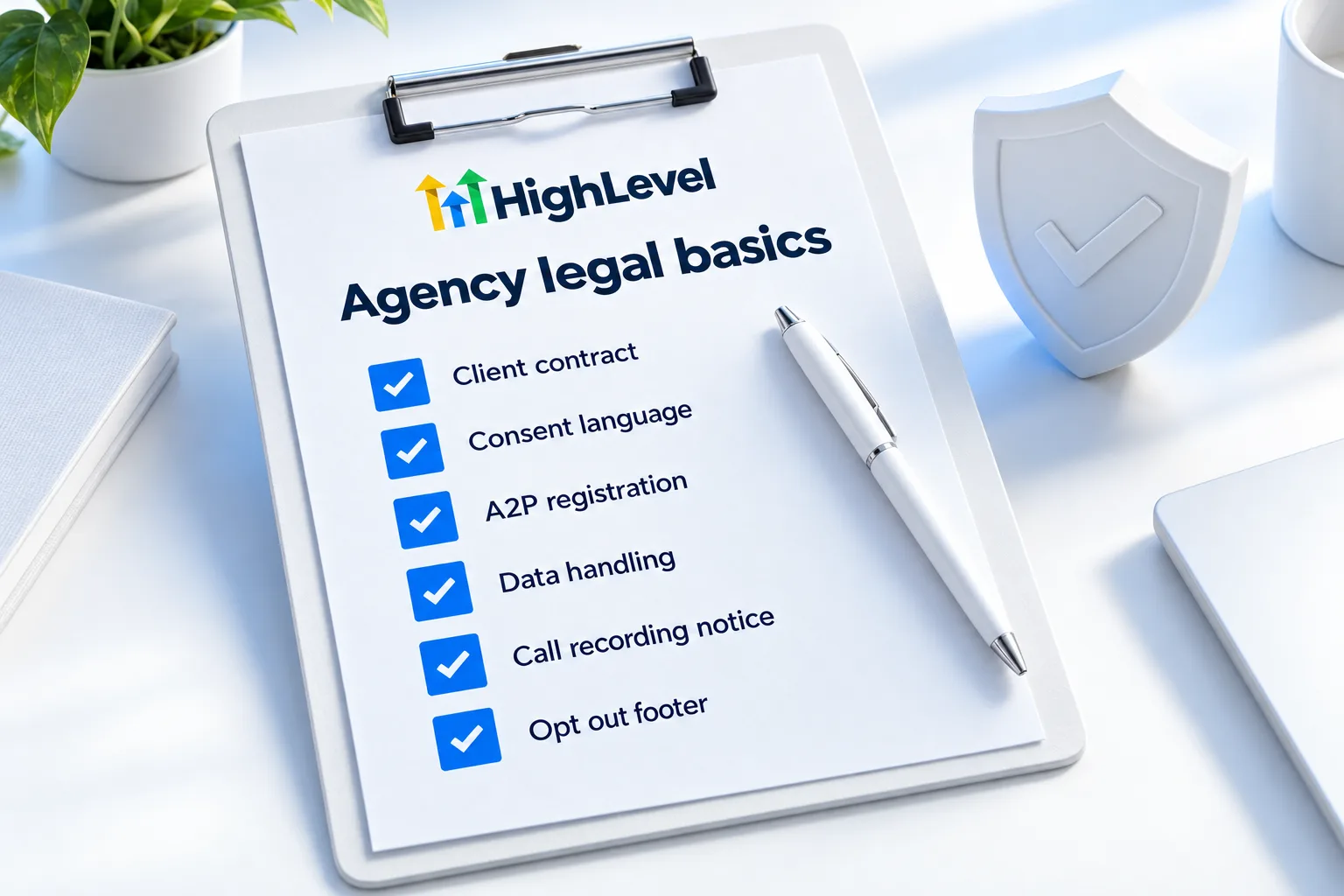
- Follow consent rules for texts and calls, register for A2P and honor opt outs.
- Publish a privacy policy and handle client data carefully.
- If you serve healthcare, understand HIPAA and use the HighLevel HIPAA upgrade where required.
- Get business insurance suited to marketing and technology services.
- Keep records of consent, contracts and approvals.
Healthcare
How does HIPAA work in HighLevel?
Messaging
Who is responsible for consent and messaging rules?
Messaging is where agencies get into the most avoidable trouble, because you are sending texts and calls on behalf of someone else's business. The rules attach to the business that sends the message, but the agency that built the campaign is rarely out of the picture when something goes wrong. So settle it in writing.
In practice that means three things. Your contract says the client confirms they have consent to contact the people in their list, and that they will not upload purchased or scraped contacts. Every form you build collects consent properly, with the SMS consent box optional and Privacy Policy and Terms links in the footer. And every text campaign honors opt outs without exception.
For US texting from a local number, A2P 10DLC registration is required, and it is done per client in the subaccount's Trust Center. Carriers review the client's website as part of it. Outbound AI voice calls carry their own consent requirement, covered on AI compliance and consent. If you also record calls, the recording and privacy laws page explains why the rules differ by state.
Data
How should an agency handle client data and access?
You will hold a lot of other people's information: your clients' customer lists, their conversations, sometimes payment details. Treat access as something you grant narrowly and remove quickly.
- Give every team member and contractor their own login. Never share one password.
- Limit each user to the subaccounts and modules they work in. The steps are on set up user permissions.
- Remove access the day someone stops working with you.
- Say in the contract who owns the account and the data, and what the client receives if they leave.
- Have contractors sign a confidentiality agreement before they see a client account.
The ownership question matters more than most new agencies expect. If a client leaves, can they take their contacts, their phone number and their funnels? Decide your answer now and write it down. A clear, fair exit policy is a selling point, and the agency SOPs page includes offboarding for this reason.
Review
What should you ask a lawyer to review?
You do not need a lawyer on retainer to start. You do need one conversation, with your documents in hand. Bring your client contract template, your own website's privacy policy and terms, the consent wording you use on forms, and a short description of the services you sell.
- Does my contract limit my liability in a way that holds up where I operate?
- Is the split of consent responsibility between me and the client clear enough?
- Do I need different terms for clients in healthcare, finance or legal services?
- What insurance fits a business that sends messages and handles data for others?
- What records should I keep, and for how long?
If you sell the platform under your own brand, there are a few more questions about terms of service and support. Those are on white label legal basics. GoHighLevel has its own terms that apply to your account as well, so read them once before you resell anything.
For the Founder side of the same topics, see Founder legal basics. The GoHighLevel agency path shows where contracts and compliance sit among the other steps, and HighLevel Founder Plan explained together with the Founder Plan, formerly Agency Pro page explain the plan agencies grow into. You can review the consent and Trust Center settings yourself during the GoHighLevel 30 day trial through Michael's link.
The contract terms above are covered in more detail on agency proposals and contracts, and agency mistakes to avoid lists the compliance errors that cause the most trouble. Quick answers to common agency questions are under GoHighLevel agency answers.

Spend a little on a lawyer now. It costs far less than one dispute later.
Questions
Common questions.
What legal basics does an agency need?
An agency needs seven basics: a proper business entity, a client contract with clear scope, consent and messaging compliance, privacy and data handling, HIPAA measures if you serve healthcare, business insurance and record keeping. This is a checklist to take to a lawyer, not legal advice, and the details depend on where you operate.
Does HighLevel support HIPAA?
Yes. HighLevel offers a HIPAA upgrade at $297 a month, and it cannot be deactivated once enabled. Turn it on only if you serve healthcare clients and need it. The upgrade is one part of compliance. Your own processes and staff access also have to meet the rules, so involve a professional.
Who is responsible for consent?
Set it out in your contract. Usually the client confirms they have consent for the contacts they give you, and the agency builds systems that respect opt outs and messaging rules. Both sides have duties under rules such as A2P and TCPA, so ask a lawyer to review how your contract divides them.
Is this legal advice?
No. This page is a checklist of topics to raise with a professional, not legal advice. Laws differ by country, state and industry, and they change. Have a lawyer review your entity, your contract and your consent process, and an accountant review how you handle taxes and records.
Do I need an LLC to start an agency?
Rules differ by country and state, so ask a professional. A separate business entity is the usual way to keep business and personal finances apart. Whatever structure you choose, open a separate business bank account from the first client payment.
Do I need A2P registration for every client?
Yes. Each client business that texts US numbers from a local number registers its own brand and campaign in its subaccount's Trust Center. Registration belongs to the business that sends the messages, not to your agency, so collect the client's business details during onboarding and submit early.
Who owns the client's data if they leave?
Whatever your contract says, so write it down. A fair policy lets the client export their contacts and tells them what happens to the account. Agree this before the work starts, because the day a client cancels is the wrong time to negotiate it.
Next step
See it in your own account. Thirty days, every feature.
Start a trial, build the first system and test it before the first invoice. Usage fees for phone, SMS, email and AI can apply during the trial.
HighLevel has three plans at a flat monthly price, each with unlimited users and contacts. See what each one includes and what it costs.
Compare the PlansStarter, Unlimited and Founder