
Client agreement
Scope, price, term, cancellation, support and limits of liability.
Home/White label CRM/Legal basics
White label CRM · Legal
Reselling software under your brand means you are responsible to your clients for it. This is a general checklist of what agencies usually put in place. It is not legal advice; have an attorney review your agreements.
The short answer
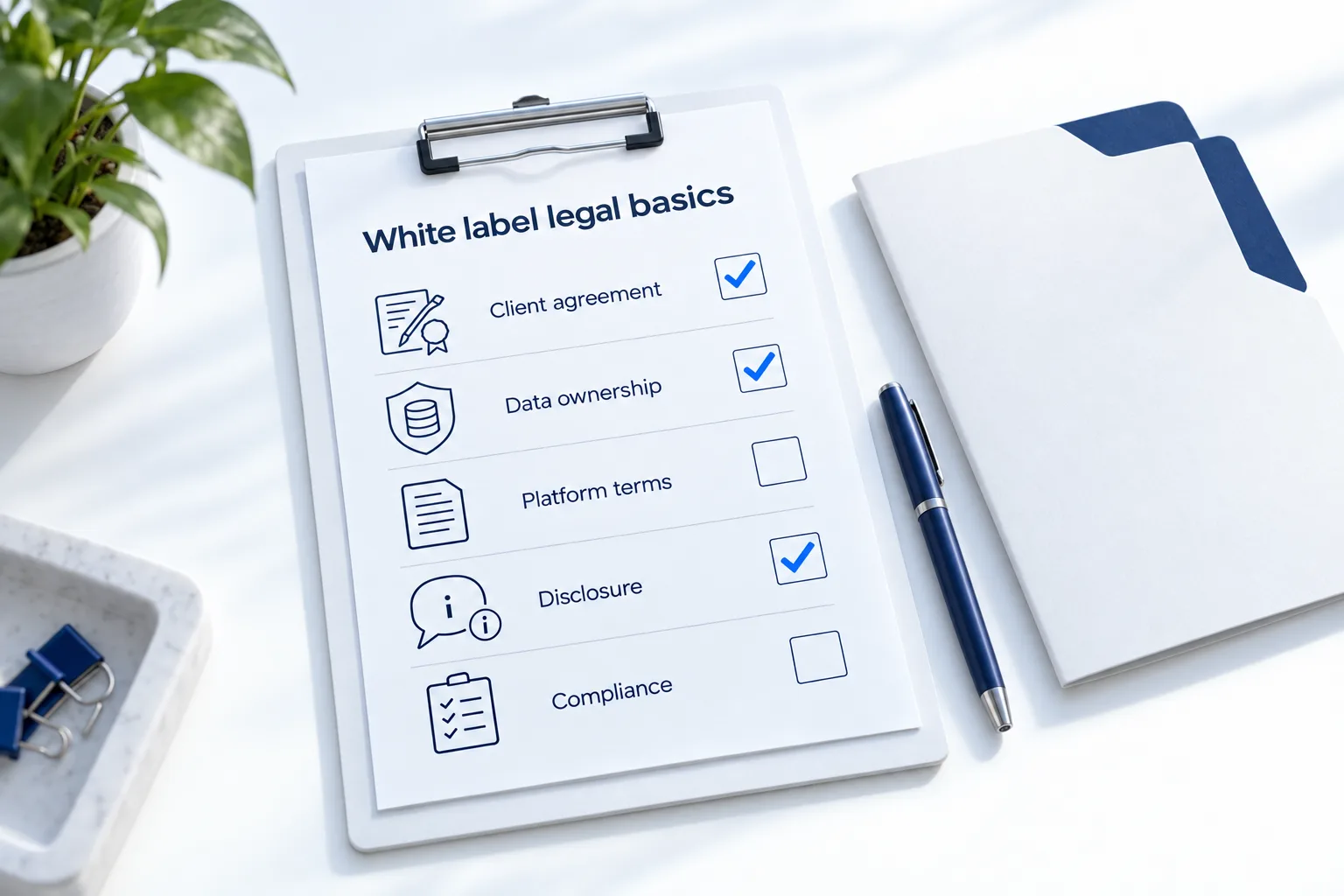
Agencies reselling white label software usually need a client agreement covering scope, fees, term and cancellation; data and privacy terms describing how client data is handled; alignment with the platform's terms of service, which still apply; honest disclosure when asked what platform you use; and attention to communication compliance such as texting registration and consent. This is not legal advice.
Michael is a sponsored HighLevel affiliate. Links to HighLevel use his partner link at no extra cost to you. HighLevel prices and product facts on this page come from HighLevel's own pricing page and help center, checked on the date above.
Checklist
Scope, price, term, cancellation, support and limits of liability.
What data you hold, how it is used and what happens when the client leaves.
HighLevel's terms of service and acceptable use still apply to your clients' use.
Do not misrepresent who built or hosts the software.
Texting registration, consent for calls and AI, and health data rules where they apply.
The wider legal checklist for an agency, beyond white label.
Read nextIn detail
The five areas above are the map. Here is what agencies usually write under the first one, in plain terms. Treat it as a list to take to your attorney, not as wording to copy.
Agency proposals and contracts covers how these documents fit into the sale, and agency legal basics covers the wider business setup.
How usage is charged depends on your plan. Rebilling with markup needs the Founder Plan, formerly the Agency Pro plan, which the Founder Plan explainer covers. You can look at the reselling settings your agreement will describe during the GoHighLevel 30 day trial through Michael's link.
Offboarding
Every client relationship ends one day. Decide how it ends while everyone is still friendly, and write it down.
Clients who know they can leave cleanly are more comfortable signing. Where HighLevel data is stored answers a question clients in regulated fields often ask.
Preparation
On the third and fourth questions, some background helps. Consent and registration rules for calls and texts are covered in AI compliance and consent, call recording in AI receptionist recording and privacy laws, and health data in is HighLevel HIPAA compliant. All of it is general information. Your attorney gives the advice.

Write the cancellation and data export terms before your first client. It is the conversation nobody wants to have later.
Questions
Yes, when the platform allows it, as HighLevel does on its white label plans, and your agreements are in order. You are responsible to your clients for the software you resell under your brand. This page is general information, not legal advice, so have an attorney review your client agreement and privacy terms.
Yes. Agencies usually put a client agreement in place covering scope, fees, term, data and cancellation, plus support and limits of liability. Be specific about what is included, because scope is where disputes start. Treat that as a list to take to your attorney, not as wording to copy.
Yes. HighLevel's terms of service and acceptable use still apply to your clients' use of the platform, even with your brand on the login. Your own client agreement should line up with them, and that is one of the things to have your attorney check.
Yes, when asked. Do not misrepresent who built or hosts the software. Your brand is on the front because you build, support and stand behind the system, and that does not require hiding the platform. Ask your attorney how to describe the relationship so nothing you say is misleading.
That is set by your agreement. Most agencies state that the client's customer list belongs to the client and can be exported when they leave, while the templates, workflows and snapshots the agency built stay with the agency. Have an attorney confirm your terms before your first client signs.
No. It is general information about what agencies usually put in place when they resell software under their own brand. Rules differ by place and by industry. Have a qualified attorney draft or review your client agreement and privacy terms before you rely on any of it.
It should follow what your agreement says. Agencies usually set a notice period, state what happens to access when it ends, let the client export their contacts and their own content, keep the account for a set period and then remove it. Decide who does the export and whether there is a fee. This is general information, not legal advice.
Next step
Start a trial, build the first system and test it before the first invoice. Usage fees for phone, SMS, email and AI can apply during the trial.
HighLevel has three plans at a flat monthly price, each with unlimited users and contacts. See what each one includes and what it costs.
Compare the PlansStarter, Unlimited and Founder