Home/AI receptionist/For medical practices
AI receptionist · Medical practices
An AI medical receptionist. Calls answered, medical advice left to clinicians.
A medical front desk checks patients in, chases referrals and answers a phone that never stops. An AI receptionist takes the routine calls: booking, rescheduling, hours and directions. This page shows what it can safely do, where it must stop, and how a practice sets one up in GoHighLevel with patient privacy handled first.
The short answer
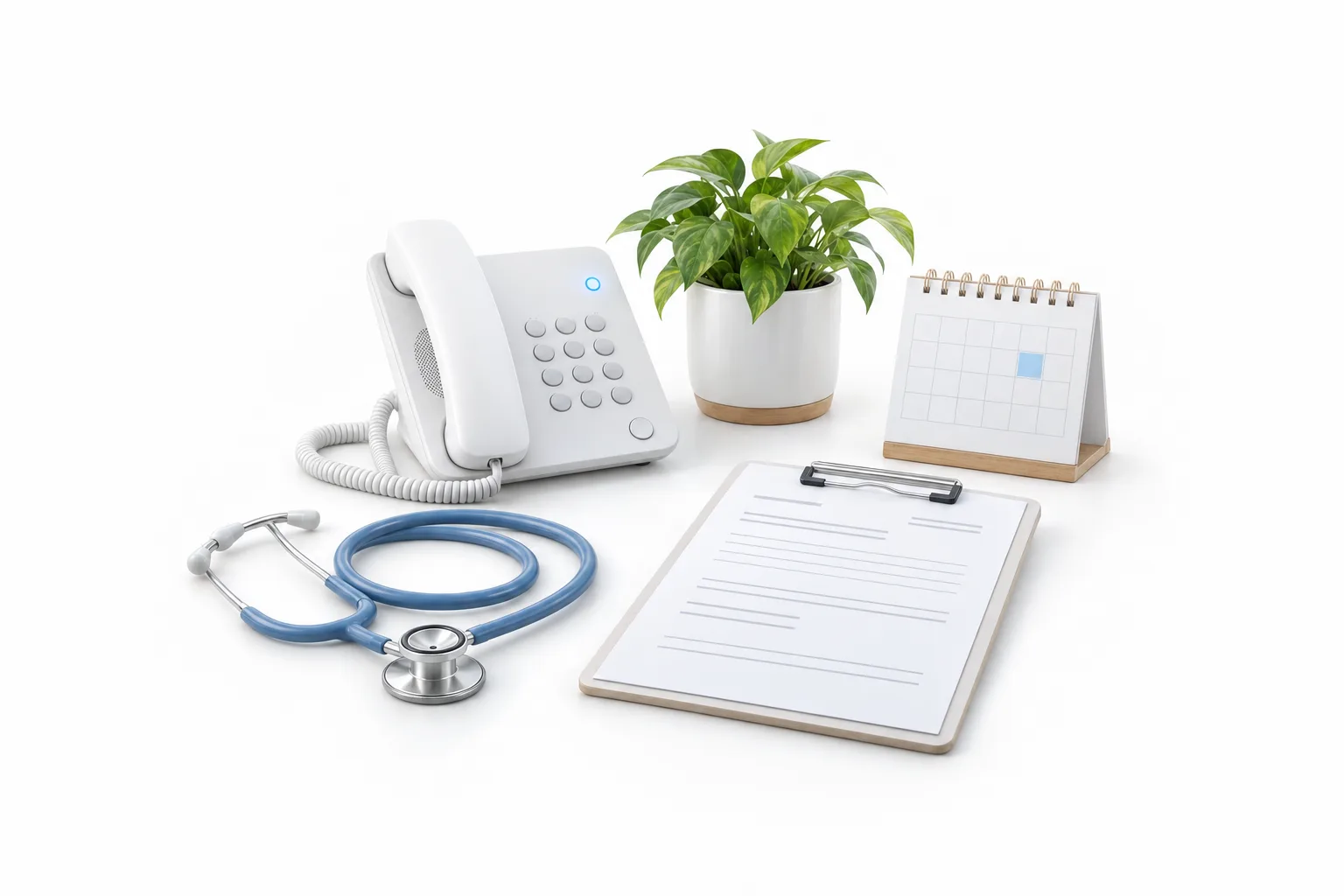
An AI medical receptionist answers the practice phone, books and reschedules appointments, answers questions about hours, location and accepted insurance, and routes urgent calls to the on call line. It must never give medical advice, discuss results or confirm benefits. Patient calls carry health information, so the practice needs a HIPAA ready setup and a recording notice first.
Michael is a sponsored HighLevel affiliate. Links to HighLevel use his partner link at no extra cost to you. HighLevel prices and product facts on this page come from HighLevel's own pricing page and help center, checked on the date above.
The calls
What can an AI medical receptionist safely do?
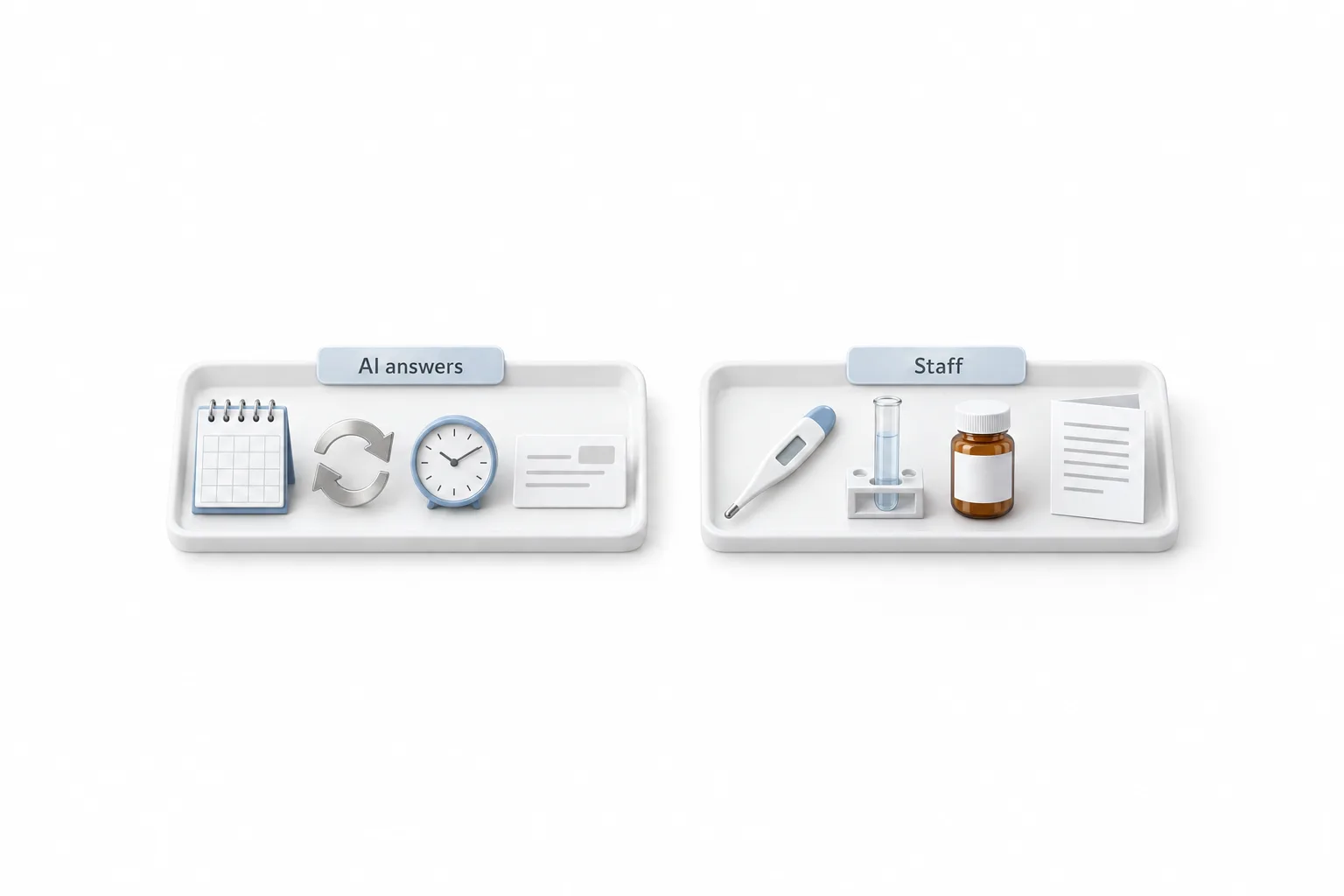
It can do the front desk work that follows clear rules. Each row shows a common patient call, what the agent does with it, and where it stops.
| Call | What the AI does | Where it stops |
|---|---|---|
| New patient wants an appointment | Offers open times from your calendar, collects name and phone, books the visit | Does not judge how soon the patient should be seen |
| Patient needs to reschedule or cancel | Moves or cancels the appointment and applies your cancellation policy | Does not discuss the reason for the visit |
| Do you take my insurance? | Answers from your list of accepted plans | Never confirms benefits or coverage |
| Hours, location, parking, what to bring | Answers from the knowledge base | Sticks to what the office wrote down |
| Refill, referral or records request | Takes the caller's name, number and request so staff can call back | Does not approve, promise or advise |
| Caller describes symptoms | Follows your urgent call rules and transfers to the on call line | Never assesses, diagnoses or reassures |
An AI receptionist for healthcare has one job: answer every call, finish the routine ones and hand the clinical ones to a person. It covers the ground a practice expects from a medical answering service and adds booking on your own calendar.
The limits
What must an AI receptionist for healthcare never do?
It must never give medical advice, discuss results or make a clinical decision. The agent follows the instructions you write, so put these limits in the prompt before the first call. The agent must never:
- Give medical advice, suggest a diagnosis or say whether a symptom is serious
- Discuss test results, medications or a treatment plan
- Confirm insurance benefits, quote a balance or settle a billing dispute
- Decide how urgent a call is beyond the written rules you gave it
- Hold on to a caller who asks for a person
Patient privacy
Is an AI receptionist HIPAA compliant for a medical practice?
Not by default on HighLevel, and no tool makes a practice compliant by itself. Patient calls can carry protected health information, and the recording, the transcript and the call summary all hold it. So the privacy setup comes before the agent goes live.
HighLevel sells a HIPAA package as an optional add on at $297 a month. According to HighLevel's help center, it includes a signed Business Associate Agreement, encryption of data before it is written to disk, audit logging and enforced multi factor authentication, and voice recordings are among the data types it lists. The package covers the agency, and HIPAA is then switched on for each subaccount that needs it. Once it is on for a subaccount it cannot be turned off, and HighLevel states the package cannot be cancelled or refunded. The full detail is on is HighLevel HIPAA compliant.
A HIPAA ready setup for an AI receptionist has four parts.
- Decide with your compliance advisor before any patient data goes in. Build and test with made up data first.
- Turn on the HIPAA package, sign the Business Associate Agreement, then switch HIPAA on for the practice's subaccount.
- Limit who can open recordings and transcripts. Set up user permissions so staff see only what they need.
- Have the agent collect only what booking needs. A name, a phone number and a few words on the reason for the visit are enough.
This is general information, not legal advice. If HIPAA is the deciding factor in your choice of software, HIPAA compliant CRM options looks at the wider field.
Call recording
Do you have to tell patients the call is recorded?
Telling every caller is the safe practice. US federal law allows recording with one party's consent, but several states require everyone on the call to consent, and a practice often has patients in more than one state. A short notice at the start covers both.
In HighLevel Voice AI, the place for it is the agent's Welcome Message, which is what the agent says when it answers. A greeting like this works: "Thank you for calling the practice. This is the virtual assistant. This call may be recorded. If this is a medical emergency, hang up and call 911. How can I help?" Run a test call and confirm the notice is the first thing you hear.
Outbound calls are different. In February 2024 the FCC confirmed that AI generated voices count as artificial voices under the Telephone Consumer Protection Act, so outbound AI calls need prior consent unless an exemption applies. Ask a lawyer before an AI agent places reminder calls. Recording and privacy laws for AI receptionists covers the state rules in more detail.
Comparison
How does it compare with a medical answering service?
The difference is what the call produces. A medical answering service puts a live person on the line who takes a message and reaches the on call provider by your script. An AI receptionist answers, books the visit and saves the record. Many practices use both.
| Medical answering service | AI receptionist | |
|---|---|---|
| Who answers | A live agent | An AI voice agent |
| Typical outcome | A message for the office or the on call provider | A booked appointment, a transcript and a call summary |
| Appointment booking | Some providers, often with limits | Directly on your calendar |
| Urgent calls | Escalated by your script | Transferred to your on call number by your rules |
| Calls at once | Limited by staff | Many |
| How it is billed | Per minute or per call, often with monthly minimums | A monthly AI plan or pay per use, plus phone minutes |
| Human empathy | Yes | Limited, so it hands off |
Service features and prices vary by provider, so none are listed here. If callers expect a person every time, keep the live service for those calls and let the agent take scheduling. AI receptionist vs answering service has a plan for switching, and after hours answering service compares the options for nights and weekends.
Set it up
How do you set up AI patient scheduling in HighLevel?
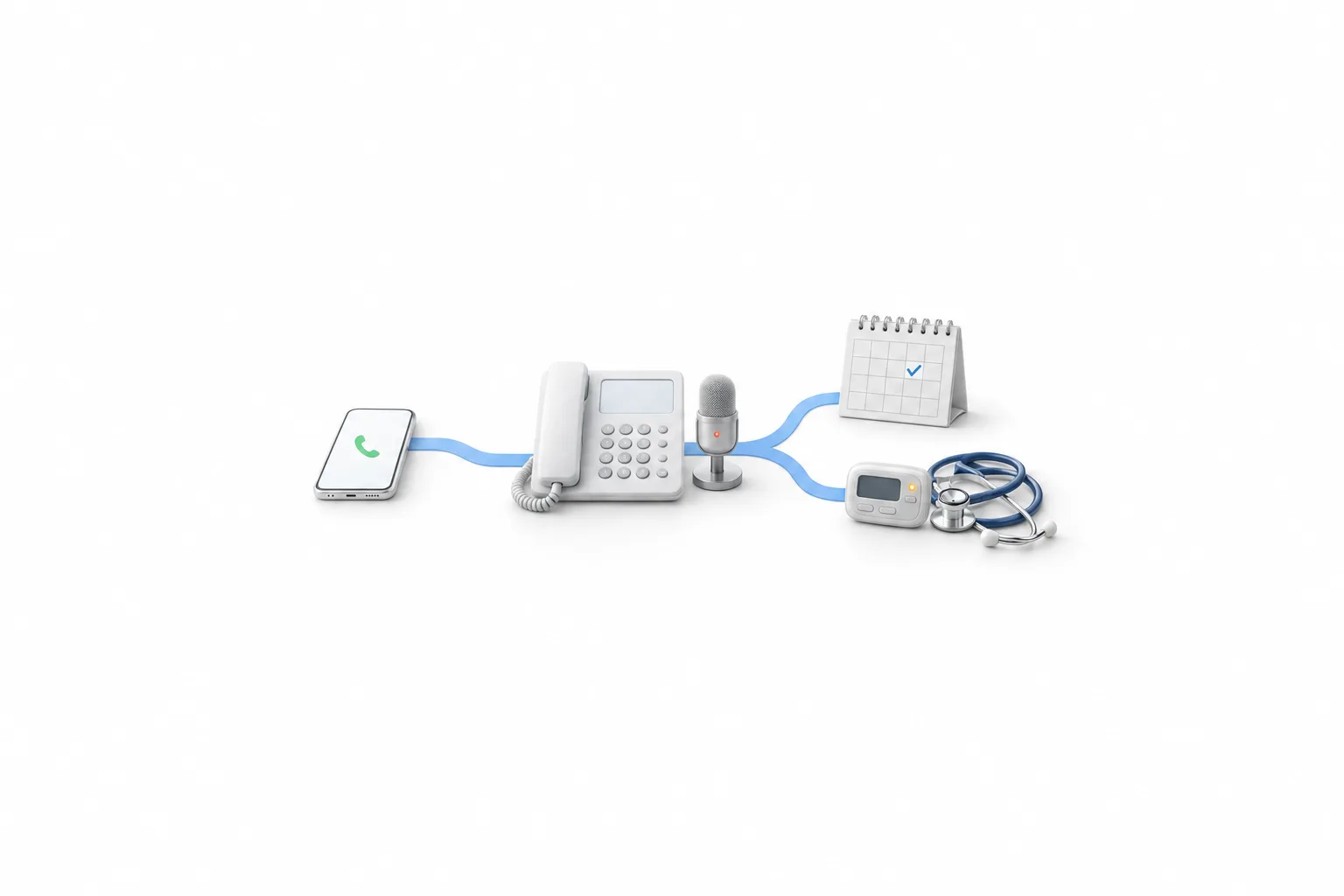
HighLevel, which many people call GoHighLevel or GHL, runs the receptionist as a Voice AI agent. Do these steps in order, and do the privacy step first.
- Settle the HIPAA decision with your compliance advisor, and turn the package on before real patient calls reach the account.
- Create a Voice AI agent. Put the recording notice and the emergency line in the Welcome Message.
- Load the knowledge base: hours, location, accepted insurance plans, new patient process and cancellation policy.
- Write the limits and handoff rules into the instructions, including the signs that mean transfer now.
- Connect a booking calendar for each appointment type and add your on call transfer number.
- Start with after hours and overflow calls. Set Working Hours to a Custom Schedule on the agent's Deploy tab so your team keeps the day.
- Run a Web Call test, then a Phone Call test. Try a booking, a reschedule and a cancellation. If the agent cannot finish a change, have it take the request for staff. Transfers do not run in a Web Call, so test every handoff from a real phone.
- Read the first week of calls under AI Agents, Voice AI, Dashboard and Logs, and tune the knowledge base from what you find.
The Voice AI build guide covers each step, and the AI receptionist setup guide for GoHighLevel walks through the whole build. Voice AI is priced through AI Employee plans per subaccount. Growth at $50 a month includes 100 Voice AI minutes, and Unlimited at $97 a month covers them under fair use. Phone charges apply to every call. The GoHighLevel AI pricing overview shows what each plan includes, and HighLevel pricing covers the $97, $297 and $497 plans the AI plan sits on. You can build and test all of it during the GoHighLevel 30 day trial through Michael's link.
Worked example
What does a patient call sound like?
Short and plain, with a clear stop when the question turns clinical. A patient calls a family practice after closing. The agent gives the recording notice and the emergency line, then asks how it can help. She wants to move her Thursday checkup to next week. The agent offers two open times and moves the appointment. She then asks whether a rash she has noticed is something to worry about. The agent says it cannot give medical advice. It offers to book a visit or take a message for clinical staff, and adds that it can connect her to the on call line if she feels it is urgent.
When the call ends, HighLevel saves the transcript, the summary and the actions the agent took, and the new time sits on the calendar. This is a written illustration, not a recording. More calls like it are on the AI receptionist call examples page.
Fit
When does it fit a medical office, and when does it not?
It fits practices where most calls are scheduling, hours, directions and insurance questions, and where appointment types already live on a calendar. It also fits offices that miss calls at lunch and after closing.
It fits less well where booking depends on clinical judgment, such as which provider a patient needs or how soon. In that case, let the agent take a booking request and have staff confirm the slot. It is also the wrong tool for a line where callers are often in distress. Keep a person on that line.
The same approach works across health practices. See AI receptionist for dentists, AI receptionist for chiropractors and AI receptionist for med spas for those offices, and the AI receptionist guide for the bigger picture. What it costs each month is on AI receptionist cost. If you want to try it, start through Michael's link and the HighLevel trial runs 30 days instead of the standard 14.
Comparing tools before you commit? Read the best CRM for medical practices.

In a medical office the rule is simple. The agent books, the clinicians advise. Write that line into the prompt before anything else.
Questions
Common questions.
Can an AI receptionist give medical advice?
No. It should never give medical advice, suggest a diagnosis, discuss test results or say whether a symptom is serious. Write that limit into the agent's instructions. When a caller describes symptoms, the agent follows your urgent call rules and transfers to the on call line or takes a message for clinical staff.
Is a GoHighLevel AI receptionist HIPAA compliant?
Not by default. HighLevel accounts are not HIPAA compliant until you add the HIPAA package, an add on at $297 a month that includes a signed Business Associate Agreement. Once it is switched on for a subaccount it cannot be turned off. Compliance also depends on how the practice uses the platform, so talk to a compliance advisor first.
Can an AI receptionist schedule patient appointments?
Yes. It offers open times from your HighLevel calendars, books the visit and collects the caller's name and phone number. A patient can also ask it to move or cancel a visit under your cancellation policy. Where the right slot depends on clinical judgment, have it take a booking request for staff to confirm.
Can an AI receptionist replace a medical answering service?
It can take the routine calls, such as scheduling, hours and directions, and transfer urgent calls to your on call number by the rules you write. A live medical answering service still fits calls that need a person every time. Many practices run both, with the AI agent answering after hours or as a backup.
How much does an AI medical receptionist cost?
On HighLevel, the AI receptionist runs on an AI Employee plan. Growth is $50 a month per subaccount with 100 Voice AI minutes, and Unlimited is $97 a month under fair use. Phone charges are separate and billed on every call, and the AI plan sits on top of your HighLevel plan at $97, $297 or $497 a month. The HIPAA package is a further $297 a month.
Next step
See it in your own account. Thirty days, every feature.
Start a trial, build the first system and test it before the first invoice. Usage fees for phone, SMS, email and AI can apply during the trial.
HighLevel has three plans at a flat monthly price, each with unlimited users and contacts. See what each one includes and what it costs.
Compare the PlansStarter, Unlimited and Founder