
Home/HighLevel/Agency/Upsells and expansion
Agency · Expansion
Upsells and expansion for agencies. The next system, when the first one works.
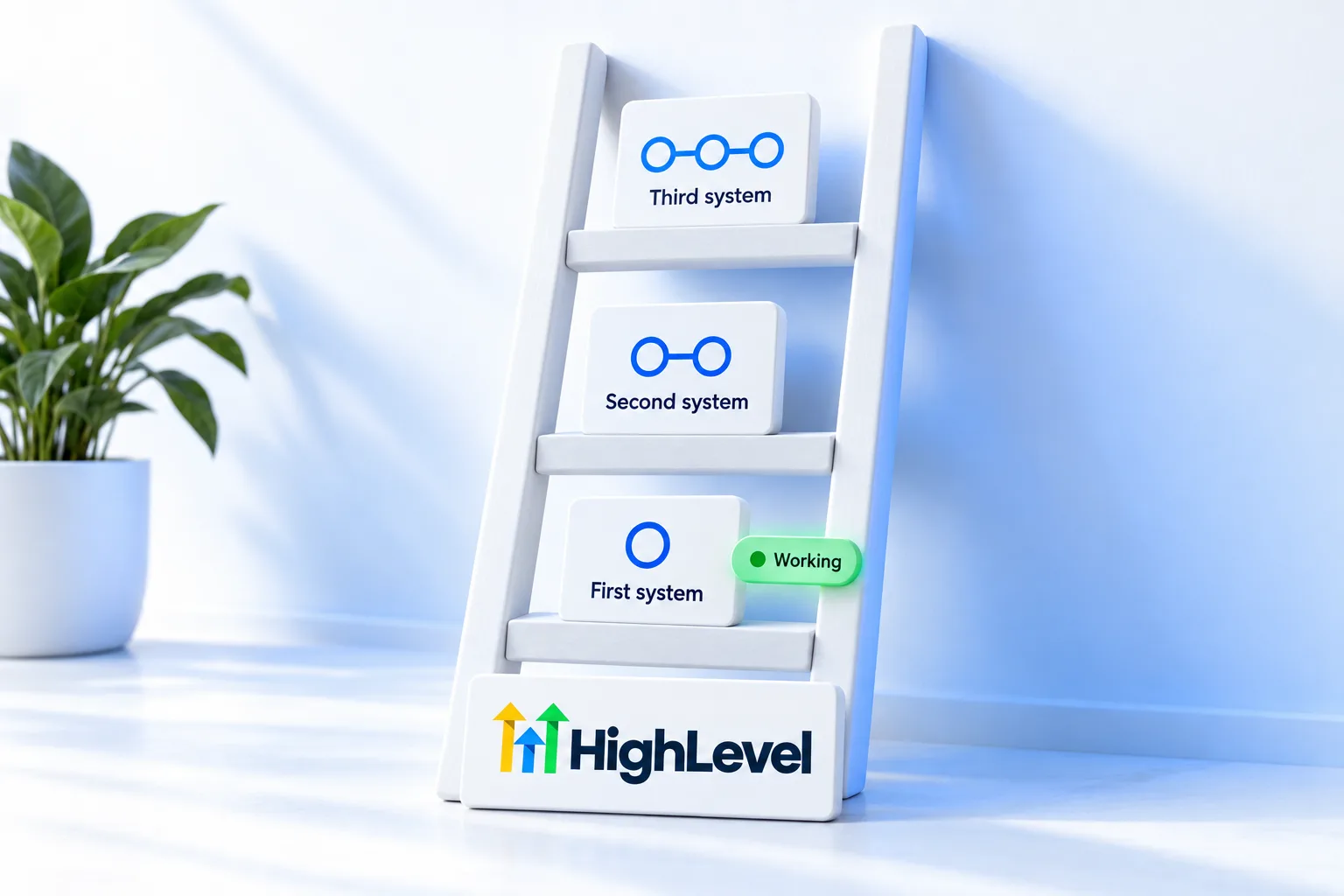
Upsells and expansion for agencies work best on a platform such as GoHighLevel, where each new system is one more build in the same client account. The easiest revenue for an agency comes from clients who already trust you. Expansion works when you add the next system that solves the next problem, after the first one has clearly delivered.
The short answer
Grow revenue per client by adding the next system that solves the next problem, only after the first has delivered, such as review requests, database reactivation, AI receptionist or chat, websites and funnels and reporting, each priced as its own setup plus monthly. Spot them in the quarterly review.
Michael is a sponsored HighLevel affiliate. Links to HighLevel use his partner link at no extra cost to you. HighLevel prices and product facts on this page come from HighLevel's own pricing page and help center, checked on the date above.
Ladder
What does a common upsell ladder look like?
| Start with | Then add | Why |
|---|---|---|
| Missed call text back | AI receptionist | Answer instead of text back |
| AI receptionist | Review requests | More calls means more happy customers to ask |
| Review requests | Reactivation | Bring back past customers |
| Reactivation | Website and funnel | Convert the traffic reviews bring |
| Any | Reporting | Show the whole picture |
Process
How do you offer an upsell the right way?
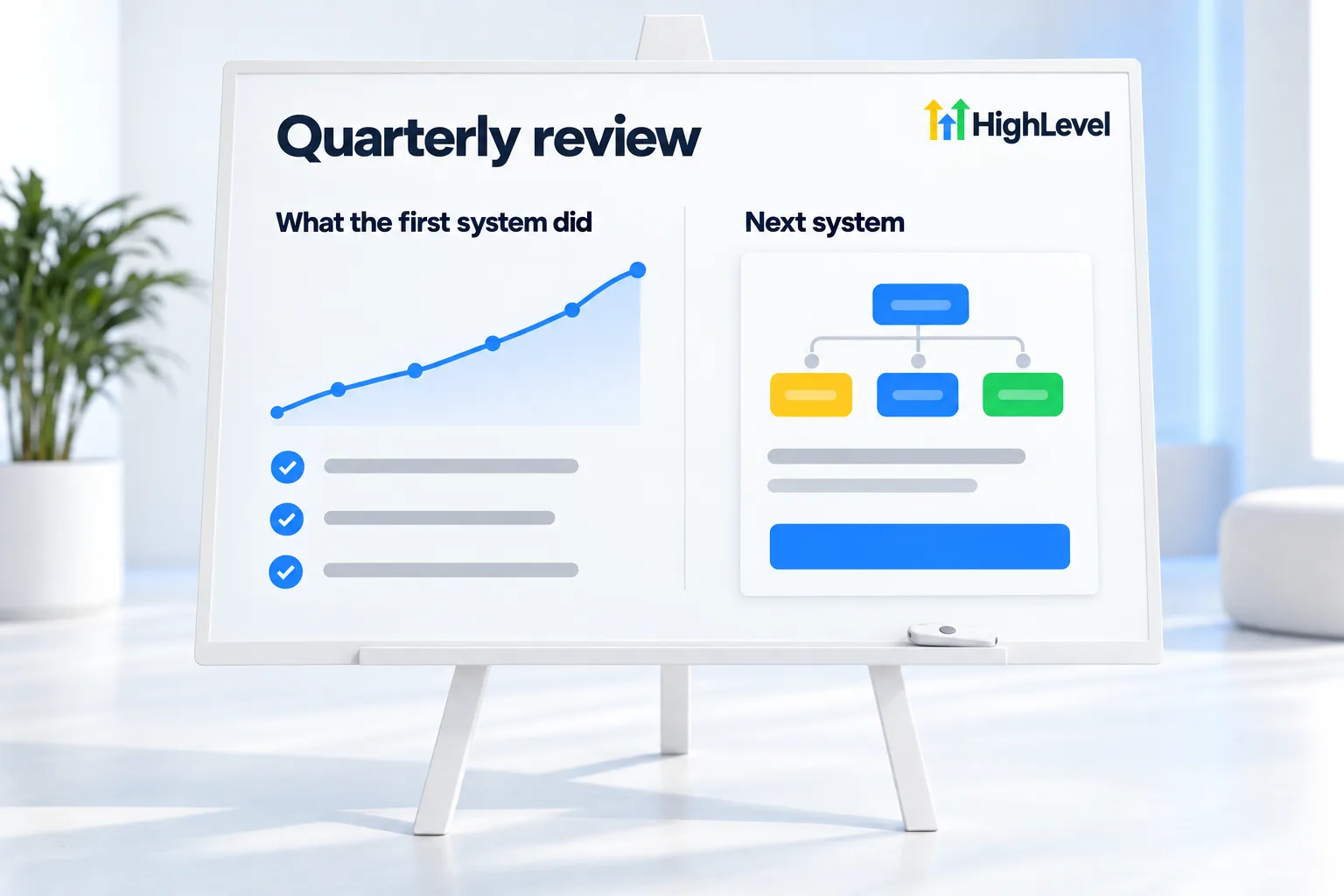
- Show the results of the current system first.
- Name the next problem in the client's words.
- Show the next system working in your demo account.
- Price it separately and simply.
- Launch it with the same onboarding checklist.
Signals
How do you spot the next problem to solve?
The best expansion offers come from the client's own account, not from your price list. The data you already report on usually points at the next gap.
| What you see | What it suggests |
|---|---|
| Calls answered but few reviews coming in | A review request workflow |
| Lots of new leads, few booked appointments | Faster follow up or a booking agent in chat |
| A large list of past customers with no recent contact | A reactivation campaign |
| Appointments booked but people not showing up | Appointment reminders |
| The owner asks how customers find them | Call tracking and a clearer report |
Listen for it on the monthly call as well. When an owner says "I wish we could" or "the other thing that drives me mad is," write it down word for word. That sentence is the opening line of your next proposal. If nothing in the data or the conversation points to a need, do not invent one. An account that is stable and happy is worth more than an add on the client did not want.
Pricing
How do you price and scope an add on?
Treat each new system as its own small project, with its own setup fee, its own monthly fee and its own scope. Folding it into the existing fee for free feels generous and teaches the client that extra work costs nothing.
- State what the new system does, in one sentence.
- State what is included and what is not, the same way you did in the original proposal.
- Price the setup and the monthly fee separately from the first service.
- Explain any new usage. A reactivation campaign sends texts and emails, and those are billed like any other usage.
- Add it to the contract as an addendum, signed before work starts.
On the delivery side, add ons should come from your template too. If review requests are something you offer every client eventually, build the workflow into your snapshot and leave it in draft. Launching it later is then a matter of filling in the custom values, testing and publishing. Two common ones are covered on build a review request workflow and build an appointment reminder workflow.
Your own plan shapes what you can charge for. Compare the GoHighLevel plans side by side, see what the Founder Plan at $497 a month adds, and read whether HighLevel is worth it for your agency. You can test every system in a 30 day trial through Michael's link before you sell it. If you are still shaping the business, start with what a Founder is.
Restraint
When should you not offer an upsell?
Timing is most of this. The same offer that lands well after a good month sounds like a money grab after a bad one.
- The first system is not clearly working yet. Fix it first.
- The client has an open complaint or an unpaid invoice.
- The client's team is not using what they already have.
- You cannot deliver the new system to the same standard as the first.
- The honest answer to "do they need this" is no.
There is a platform route to expansion as well. On the Founder Plan you can sell the software itself under your brand, so a client who wants their team in the CRM every day moves to a plan with a login, covered on white label pricing for agencies. That is a different kind of offer and it suits clients who want to do more themselves.
Whichever route you take, expansion rests on retention. Clients buy the second system from an agency that reports clearly and replies quickly. If those basics are in place, client reporting is already doing your selling. If you run several clients on GoHighLevel, note every expansion idea on the client's opportunity so it is ready for the next quarterly review.

Never upsell a client whose first system is not working. Fix that first, and the next sale is easy.
Questions
Common questions.
How do agencies grow revenue per client?
Agencies grow revenue per client by adding the next system that solves the next problem, once the first system has clearly delivered. Common next steps are review requests, database reactivation, an AI receptionist or chat, websites and funnels, and reporting. Each one is priced as its own setup plus a monthly fee.
What is a good first upsell?
A good first upsell is review requests or database reactivation, offered after an AI receptionist or missed call text back is working. Both solve a problem the client can already see, so the step from the first system to the next one feels natural. Offer it only after the first system has delivered.
When should I offer an upsell?
Offer an upsell in a quarterly review, after you have shown the results of the current system. That review is where the next problem shows up. Do not offer more while the first system is still unproven, because expansion works only when the client already trusts what you built.
How do I price add ons?
Price each add on as its own setup fee plus a monthly fee, the same way you priced the first system. Put the scope in writing so the client knows what is included. Do not fold new work into the old price, because free work teaches clients that extra scope costs nothing.
What is the difference between an upsell and a cross sell?
An upsell is a bigger version of what the client has. A cross sell is a different system that solves another problem. Agency expansion is mostly cross selling.
Should add ons be free for loyal clients?
No. Price each new system separately. Free work teaches clients that extra scope costs nothing.
How do I bring up an upsell without sounding pushy?
Show the current results first, then describe the next problem in the client's own words and ask if they want to see a fix.
Next step
See it in your own account. Thirty days, every feature.
Start a trial, build the first system and test it before the first invoice. Usage fees for phone, SMS, email and AI can apply during the trial.
HighLevel has three plans at a flat monthly price, each with unlimited users and contacts. See what each one includes and what it costs.
Compare the PlansStarter, Unlimited and Founder