
Home/HighLevel/Agency/Case studies
GoHighLevel agency · Proof
Writing agency case studies. Real numbers, in the client's words.
A good case study does your selling for you. It shows a business like your prospect's, the problem they had, what you built and what changed, with numbers you can stand behind.
The short answer
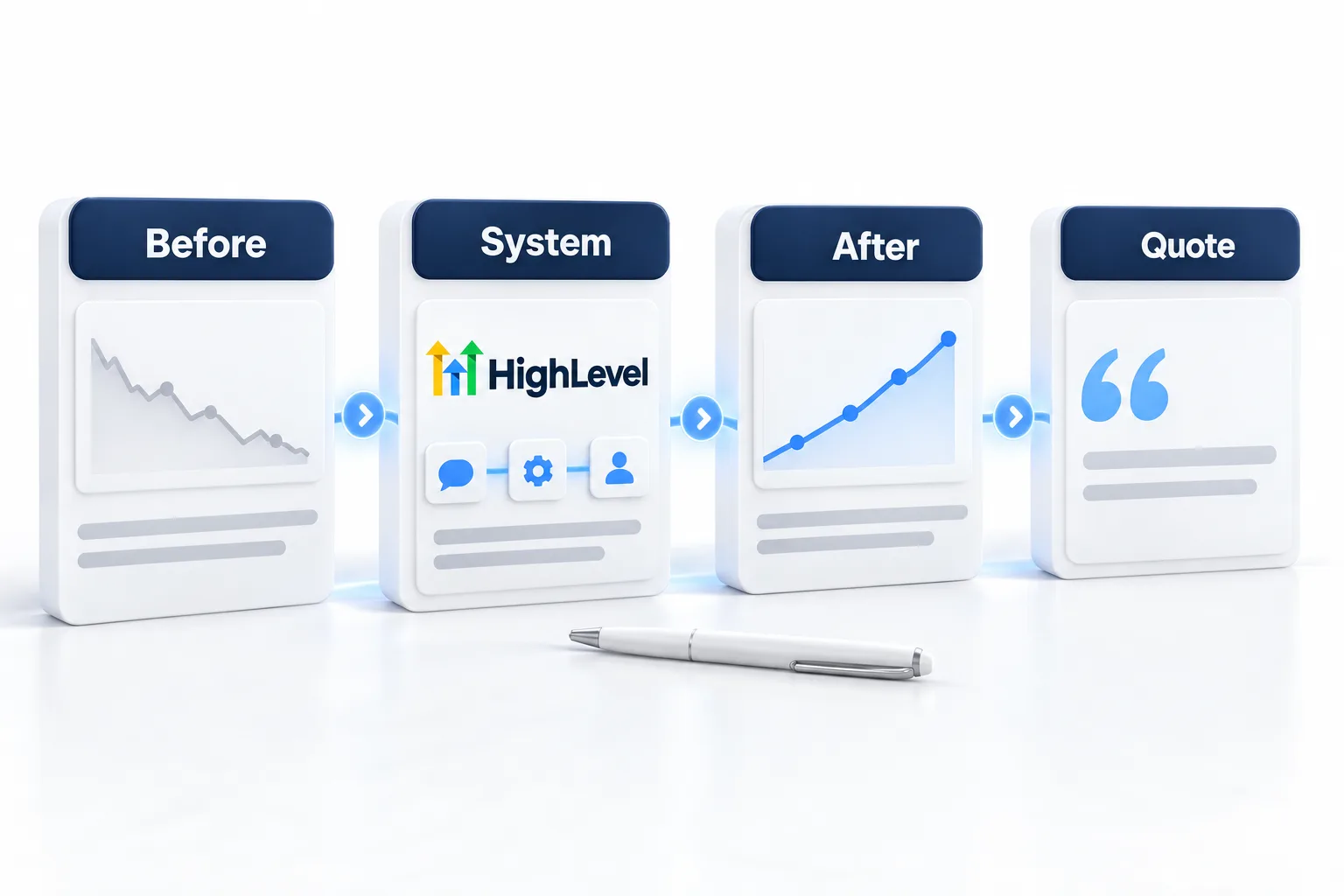
Write an agency case study in five parts: the client and their problem, the before numbers, the system you built, the after numbers over a stated period, and a quote in the client's own words. Get written permission, keep every number accurate and dated, and note anything else that changed at the same time.
Michael is a sponsored HighLevel affiliate. Links to HighLevel use his partner link at no extra cost to you. HighLevel prices and product facts on this page come from HighLevel's own pricing page and help center, checked on the date above.
Parts
What are the five parts of an agency case study?
- The client and the problem.
- The before: what was happening, with numbers.
- The system you built, in plain words.
- The after, over a stated time period.
- A quote from the client.
Honesty
How do you keep a case study honest?
- Written permission to publish
- Numbers you can show from the account
- The time period stated
- Other changes mentioned, such as a new hire or season
- No implication that results are typical

Before
How do you capture the before numbers?
The before is the part most agencies lose. By the time the system is working, nobody remembers what things looked like on day one. So make it a step in your client onboarding system, not something you reconstruct later.
Ask for the numbers the client already has. How many calls came in last month and how many were missed. How many leads the website form produced. How many reviews the business has and what the rating is. How long it usually takes someone to reply to a new inquiry. If the owner does not know, write that down too. "We did not know how many calls we missed" is an honest before.
Once the system is live in HighLevel, the after comes from the account itself. Call logs, conversations, appointments and pipeline stages are all dated, so you can state a period and stand behind it. A client reporting dashboard keeps those numbers in one place, which means the case study is mostly a matter of copying what the client already sees every month.
Permission
How do you ask a client for permission and a quote?
Ask when the client is happiest, which is usually on a monthly review call right after a good number. Keep the request small and specific. Tell them you would like to write up what you built together, that they will see it before anyone else does, and that they can change or remove anything.
- Ask on a call, then confirm by email so the permission is in writing.
- Send three or four short questions instead of asking them to write a testimonial.
- Draft the quote from their answers, using their words.
- Send the finished page for approval before you publish.
- Keep the approval email with your client records.
Some clients will say yes to the story but no to their name. That is fine. A case study that says "a dental practice with two locations" is still useful, as long as every detail in it is true. Do not invent a name or a logo to make it look more real.
Use
Where should you use a finished case study?
A case study earns its keep in three places. On a sales call, it answers the question every prospect is thinking: has this worked for a business like mine. In a proposal, one short paragraph and one number carry more weight than a page of features. On your website, it gives search engines and AI assistants a specific, dated story to cite.
Keep it in the same niche you are selling to. A plumber is not moved by a med spa result. This is one reason choosing a niche early pays off: every case study you write keeps working for the next prospect. If you run your agency on GoHighLevel, store each one as a document or page you can send from the conversation in one click.
Finally, date it and revisit it. A result from two years ago with no update invites doubt. Add a line when the client reaches a new milestone, or retire the case study when the relationship ends.
Case studies are one step in the GoHighLevel agency path, and the HighLevel case studies on the blog show the format in practice.
The numbers in a case study come from the systems you run. If you have not built one yet, start the GoHighLevel 30 day trial through Michael's link. GoHighLevel plans compared shows the plan options, the Founder Plan, formerly Agency Pro is the plan agencies grow into, and HighLevel Founder Plan explained covers what it is for. Quick answers to common agency questions are under GoHighLevel agency answers.

Measure the before on day one. You cannot tell the story later without it.
Questions
Common questions.
What goes in an agency case study?
An agency case study has five parts: the client and their problem, the before numbers, the system you built, the after numbers over a stated period and a quote in the client's own words. Keep every number accurate and dated, and note anything else that changed at the same time, such as a new ad campaign.
Do I need permission?
Yes, in writing. Ask the client to approve the final text, the numbers and the use of their name before you publish anything. An email that says they approve is enough to keep on file. If they prefer not to be named, publish it without the name or do not publish it.
Can I round up numbers?
No. Keep them accurate and dated. A rounded up figure is an invented figure, and a prospect who checks will stop trusting the rest of the page. State the exact number, the period it covers and where it came from, such as the client's own dashboard or call log.
Where should I use case studies?
Use them on sales calls, on your website and in proposals. On a call, pick the one closest to the prospect's business type. On your site, give each its own short page. In a proposal, a short summary with a link is enough. One relevant case study beats several unrelated ones.
How long should an agency case study be?
One page is enough. A short problem, the system in plain words, before and after numbers with dates, and one quote. Lead with the result, so a busy owner gets the point in the first few lines, and save the detail for the call.
What if my client will not share numbers?
Use the numbers they approve, or describe the change without figures. Never estimate a figure and present it as fact. A plain description still works, for example that calls after hours now get answered and booked, with a quote from the owner about what changed for the team.
Can I publish a case study without naming the client?
Yes. Describe the business type and size truthfully and leave the name out. Do not invent a name or logo. Still get written permission, because details such as the town and the trade can identify a business. Say plainly on the page that the client asked not to be named.
Next step
See it in your own account. Thirty days, every feature.
Start a trial, build the first system and test it before the first invoice. Usage fees for phone, SMS, email and AI can apply during the trial.
HighLevel has three plans at a flat monthly price, each with unlimited users and contacts. See what each one includes and what it costs.
Compare the PlansStarter, Unlimited and Founder