Home/White label CRM/SaaS explained
White label CRM · SaaS explained
White label SaaS. Who sells it and how the money flows.
An agency sells software it did not build, under its own brand and at its own prices. This page explains who does what, who pays whom, what to check in a platform and how GoHighLevel handles it with SaaS Mode.
The short answer
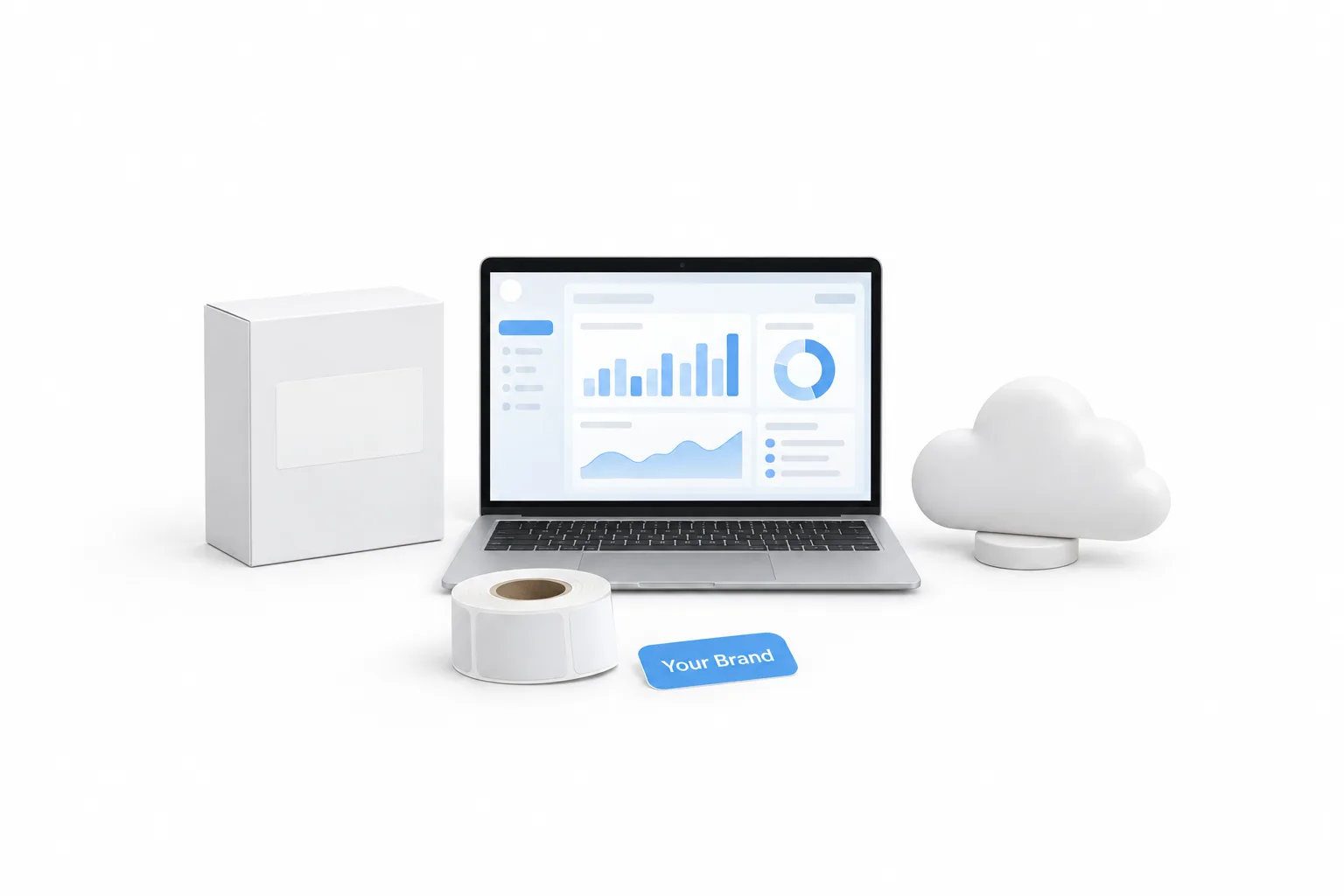
White label SaaS is software built and hosted by one company and sold by another under its own brand. The vendor runs the product. The agency or reseller pays the vendor a subscription, sets its own prices and bills the client. GoHighLevel is one example, through SaaS Mode on its Founder Plan.
Michael is a sponsored HighLevel affiliate. Links to HighLevel use his partner link at no extra cost to you. HighLevel prices and product facts on this page come from HighLevel's own pricing page and help center, checked on the date above.
Definition
What is white label SaaS?
White label SaaS is subscription software that one company builds and hosts and another company sells under its own brand. SaaS stands for software as a service: the product runs in the cloud and the customer pays a recurring fee to use it. White label means the seller's name is on it, not the maker's.
Three parties are involved.
- The vendor. Builds the software, hosts it, keeps it running and ships the updates.
- The agency or reseller. Puts its brand on the software, sets the prices, sells it and looks after the client.
- The client. Logs in at the agency's address, uses the software and pays the agency.
White label software is the wider term. It covers any software a vendor lets others rebrand. SaaS is the subscription form of it, which is why people use the two phrases for the same thing. The white label CRM guide looks at one kind in detail: a client management platform sold under an agency brand.
Sellers
Who sells white label software?
Mostly service businesses that already have clients and want a product to go with the service. They know their market. They do not want to write and host software themselves.
- Marketing agencies. They already run campaigns for clients. A branded platform gives those clients one place to see leads, messages and bookings.
- Consultants and coaches. They package their method as a ready built account the client can log in to.
- Industry specialists. Someone who knows dental offices or home services sells a setup built for that one trade.
- Software resellers. They build a business around the product itself, with plans, a checkout and support.
What they share is a template. The seller builds a working system once, saves it and loads it into every new client account. The client pays for that finished system and the help that comes with it, not for raw software.
The model fits poorly if you have one or two clients and no plan for more, or if you do not want to answer support questions. Selling software means supporting it.
The money
How does the money flow between vendor, agency and client?
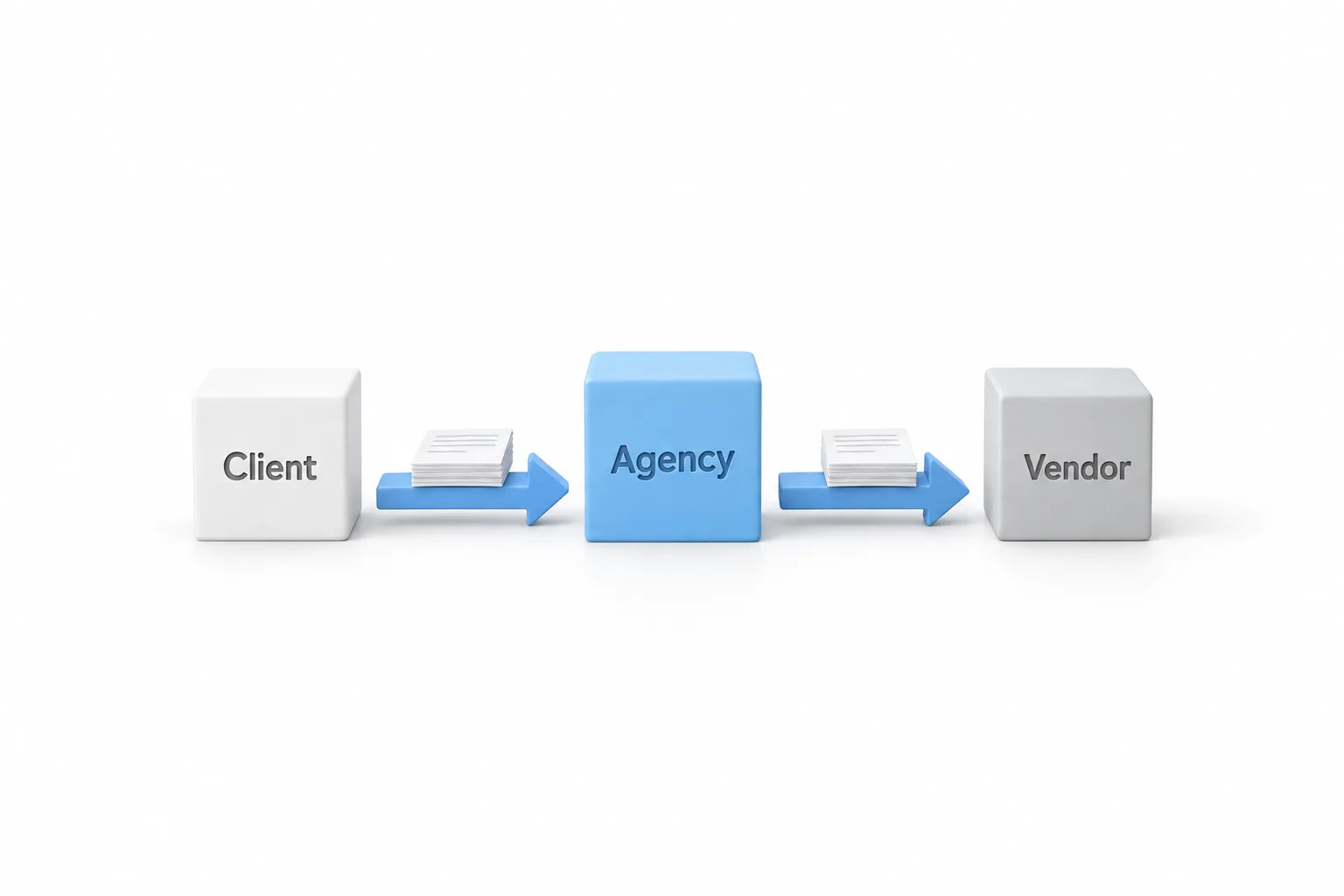
The money moves in two separate lines. The agency pays the vendor. The client pays the agency. The client does not pay the vendor and does not see the vendor's invoice.
| Payment | Who pays | Who receives | What it covers |
|---|---|---|---|
| Platform subscription | Agency | Vendor | The right to use and rebrand the software |
| Usage at cost | Agency | Vendor | Metered items such as calls, texts, email and AI |
| Client plan fee | Client | Agency | Access to the branded software each month |
| Setup fee | Client | Agency | Onboarding and building the client's first systems |
| Usage rebilled | Client | Agency | The client's own usage, at cost or with a markup where the platform allows it |
The agency keeps what clients pay in, minus what the vendor charges, minus the time spent on support and upkeep. The time is the part people leave out. Work out what one client costs you before you quote a price, and set the price on the value of the system the client gets. White label CRM pricing lists the published costs on one platform and shows how to find your floor per client.
Nobody can promise what you will earn from this model. It depends on your clients, your prices and how well you support the product.
Checks
What should you check in a white label platform?
Check five things before you commit: how deep the branding goes, how billing works, who supports the client, what the exit terms are and what the plan you need really costs. Vendors use the words white label for very different things, from a logo on a report to a full software business under your name.
| Check | What to ask the vendor |
|---|---|
| Branding depth | Does my brand cover the login address, the app, the links clients click, the emails and a mobile app, or only the logo? |
| Billing | Can I set my own plans and prices, take payment through my own checkout and pass usage on to the client? |
| Support | Who answers my client's questions? Is there vendor support for me, and can I buy support under my brand? |
| Exit terms | Can a client export their data? What happens to client accounts if I cancel? Is the contract monthly or annual? |
| True cost | What does the plan I really need cost, and are texting, calling, AI and add ons included or extra? |
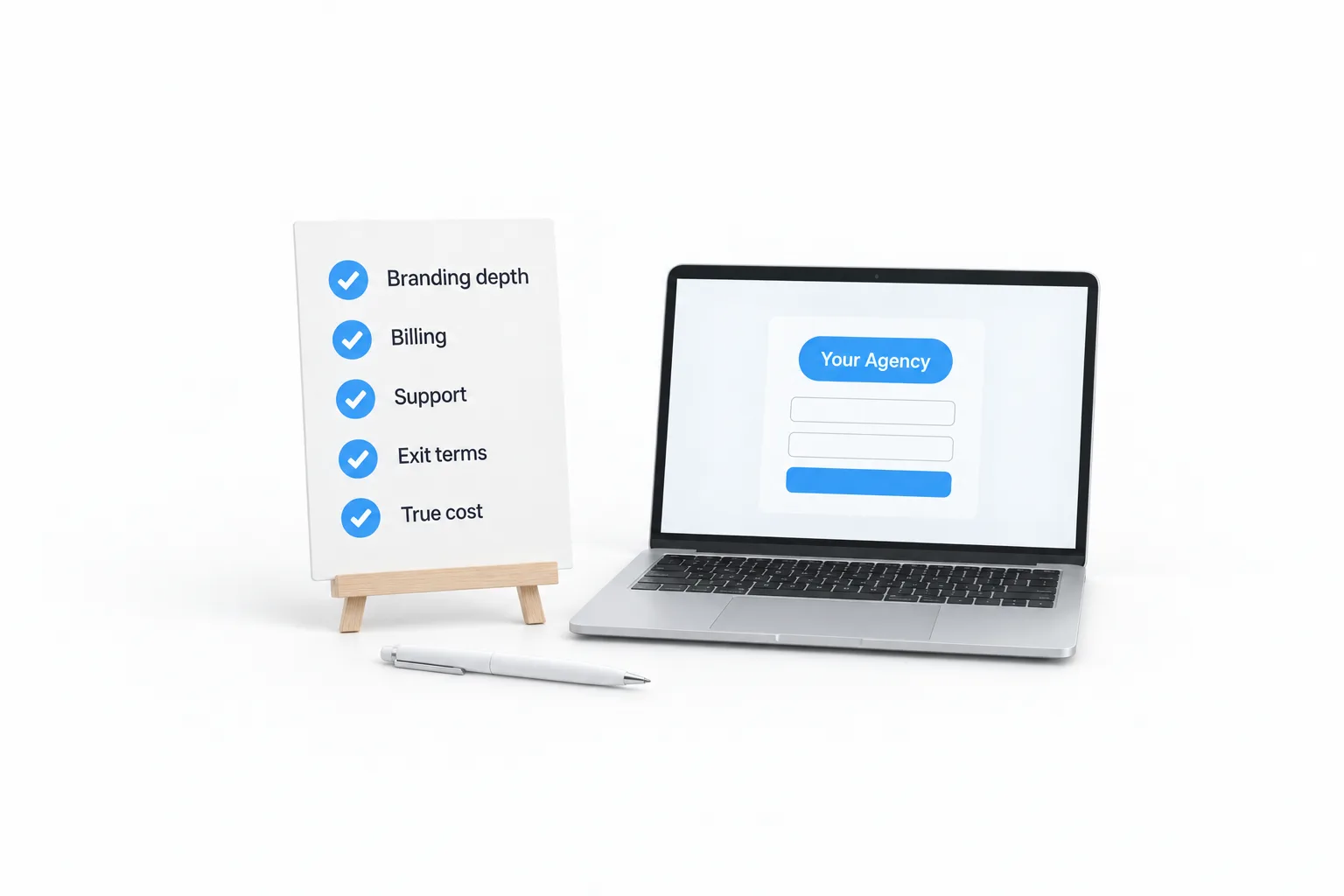
Exit terms get the least attention and matter the most. You are building a client base on software you do not own, so find out how you and your clients can leave before you start. The best white label platforms comparison applies the same checks to the kinds of tools you will see.
One example
How does GoHighLevel handle white label reselling?
HighLevel handles it with a feature called SaaS Mode, which sits on the Founder Plan. You may also see it written as Go High Level SaaS or GHL SaaS Mode. It is one platform built for this model, and it is the one CRM Pros works in every day. Here is how it answers the checks above, from HighLevel's published pricing and help center.
| Check | How HighLevel handles it |
|---|---|
| Branding depth | A branded desktop app on your own subdomain, on the Unlimited plan and the Founder Plan. Branded links and email sending on your own domains. A white label mobile app as an add on at $497 a month or $1,491 a quarter. |
| Client accounts | Each client gets a subaccount. A snapshot loads a saved setup into a new one. |
| Billing | SaaS Mode on the Founder Plan. You build plans and prices in the SaaS Configurator, clients pay through your checkout and the subaccount is created automatically. Usage can be rebilled with your markup. |
| Payment providers | SaaS V1 runs on Stripe. SaaS V2 supports Stripe, NMI, Authorize.net and Square. |
| Plan cost | Unlimited is $297 a month. The Founder Plan is $497 a month or $4,970 a year. Usage for phone, SMS, email and AI is billed on top. |
Source: HighLevel pricing plans page and help center (SaaS Mode FAQs and Getting Started with the SaaS Configurator), checked November 11, 2026.
The plan decides how far you can go. Unlimited gives you the branded app. Your own plans, prices and markup need the Founder Plan. The GoHighLevel SaaS Mode guide covers the configurator, the sale flow and the setup order.
Two limits are worth knowing before you build. HighLevel's SaaS Mode FAQ says that when SaaS is disabled on a subaccount, the subscription is cancelled and the wallet is permanently deleted. And once a plan has sale links or active subscriptions, its currency cannot be changed. Plan the offer on paper first.
You can open these settings in your own account during the GoHighLevel 30 day trial through Michael's link. HighLevel's standard trial is 14 days.
Legal
What are the legal basics of selling software under your brand?
You are responsible to your clients for the software you sell under your brand, even though a vendor runs it. Agencies usually put five things in place. This is general information, not legal advice. Have an attorney review your agreements.
- A client agreement. Scope, fees, term, cancellation, support and limits of liability.
- Data and privacy terms. What data you hold, how it is used and what happens when the client leaves.
- The platform's terms. The vendor's terms of service still apply to your clients' use.
- Honest disclosure. Do not misrepresent who built or hosts the software.
- Communication compliance. Texting registration and consent for calls and AI, where they apply.
White label legal basics goes through each area, including what happens to the data when a client leaves and what to ask your attorney before your first client.
First steps
How do you start a white label software business?
Start with the client and the problem, then choose the software. Most of the work is in the offer and the template. The software settings come last.
- Pick the clients you serve. One type of business with one repeatable problem is easier to package than a product for everyone.
- Choose the platform. Run every vendor through the five checks above and price the plan you would really need.
- Finish the branding. Set up the login domain, the logo, the colors and the sending domains before any client logs in.
- Build one working setup and save it. A saved template means every new account starts already built. In HighLevel that template is called a snapshot.
- Set your plans and prices. Two or three plans are enough to start. Give each a name, a price and a clear list of what it includes.
- Connect payments and buy your own plan. Go through your own checkout the way a client would. In HighLevel, use a real card, because purchases in test mode do not create subaccounts.
- Put the agreement in writing. Scope, fees, usage, cancellation and data export, reviewed by your attorney.
- Decide who answers support. Name the person, the hours and the channel before the first client asks a question.
If you choose HighLevel, how to set up white label mode walks through the screens step by step.

Decide who answers the client's questions before you pick a price. The software is the easy part. The support is what clients remember.
Questions
Common questions.
What is white label software?
White label software is any software a vendor lets other businesses rebrand and sell as their own. The SaaS form is the subscription version of the same idea: the software runs in the cloud, the vendor keeps it updated and the reseller charges clients a recurring fee instead of a one time license.
What is GoHighLevel white label SaaS?
It is a common name for SaaS Mode, the HighLevel feature for selling the platform as your own software. You build plans and prices in the SaaS Configurator, clients pay through your checkout and a subaccount is created automatically. SaaS Mode needs the Founder Plan at $497 a month.
How much does a white label platform cost?
It depends on the vendor, so price the plan you would really need, not the entry plan. As one published example, HighLevel includes the branded desktop app on the Unlimited plan at $297 a month, and the Founder Plan at $497 a month adds SaaS Mode and rebilling with markup. Usage for phone, SMS, email and AI is billed on top.
Who supports the client when the software carries your brand?
The agency does, in most setups. The client bought from your brand, so questions come to you first. The vendor supports you, and some vendors sell support under your brand as an extra. Decide who answers before your first sale and write the support hours and channels into the client agreement.
Do clients need to know which platform is underneath?
You do not have to put the vendor's name on your marketing, but do not misrepresent who built or hosts the software. If a client asks what platform you use, tell them. Your brand is on the front because you build, support and stand behind the system, and that stays true either way.
Next step
See it in your own account. Thirty days, every feature.
Start a 30 day trial through Michael's link, build the first system and test it before the first invoice. Usage fees for phone, SMS, email and AI can apply during the trial.
HighLevel has three plans at a flat monthly price, each with unlimited users and contacts. See what each one includes and what it costs.
Compare the PlansStarter, Unlimited and Founder