
01
Score each answer
Not yet is 0, Partly is 1, Mostly is 2, Yes is 3. Ten questions, thirty points, shown out of 100.
The short answer
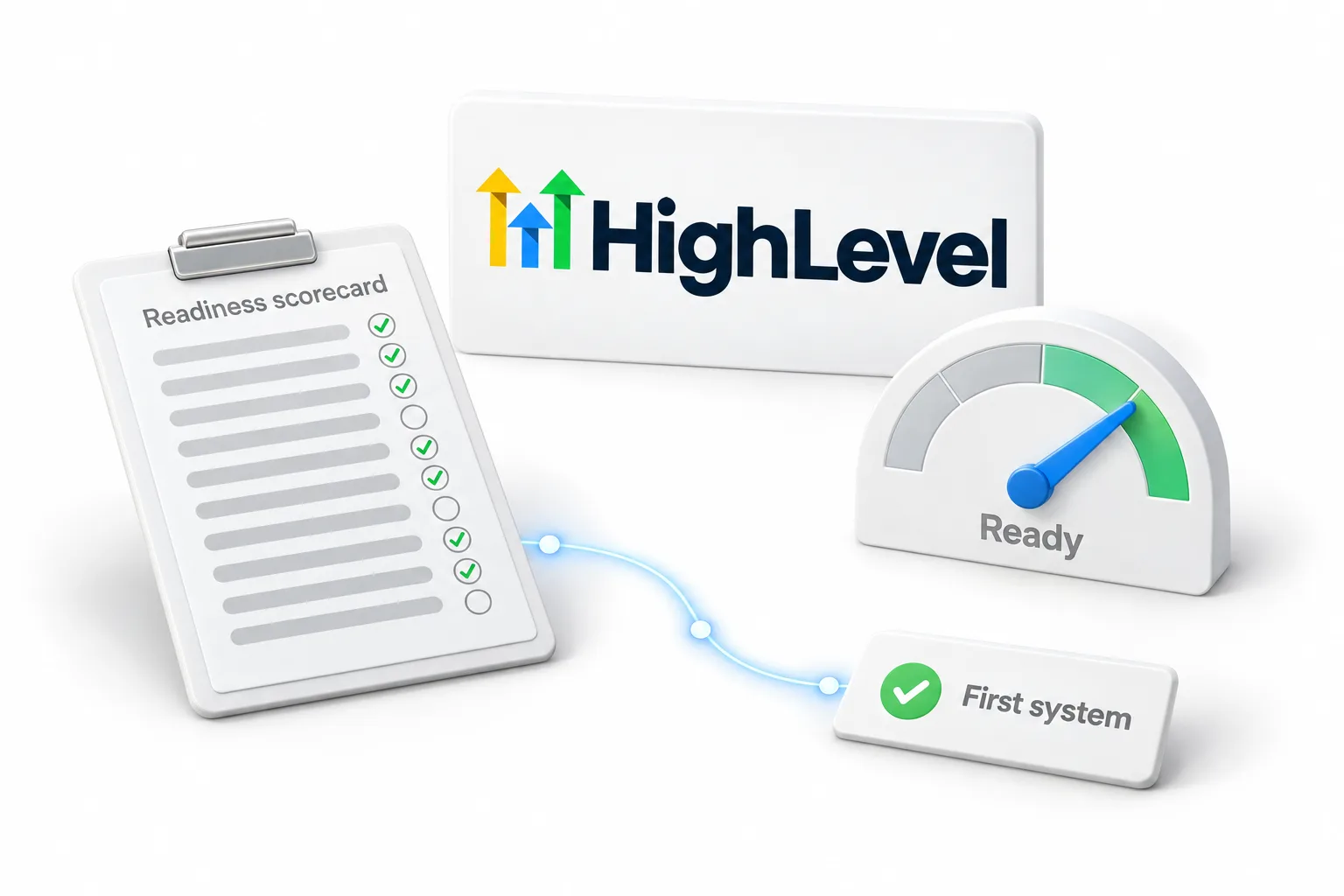
The AI readiness scorecard asks ten questions about how your business handles leads, calls, bookings and reviews today. Each answer scores 0 to 3, and the total is shown out of 100. The lowest scoring system question names the first AI system to build, with the HighLevel guide that builds it.
Michael is a sponsored HighLevel affiliate. Links to HighLevel use his partner link at no extra cost to you.
The scorecard
Pick the answer that is true today, not the one you are planning. The lowest scores show where the first system goes.
Question 01
Spreadsheets, a phone and three inboxes count as no.
Question 02
A human or a system, as long as it happens every time.
Question 03
Voicemail does not count.
Question 04
A live calendar with the right availability and reminders.
Question 05
Asked the same way, every time, by a system.
Question 06
A form that emails you is a start, not a system.
Question 07
Same steps, same messages, same timeline.
Question 08
Leads, replies, bookings, shows, revenue.
Question 09
A person or a system, written down.
Question 10
Two focused hours a week is enough.
Build this first
Open the GuideOpens the guideNothing you enter is stored or sent anywhere. The score is calculated in your browser. Your inputs, your estimate: this is a planning tool, not a projection or a promise of results.
How it works
01
Not yet is 0, Partly is 1, Mostly is 2, Yes is 3. Ten questions, thirty points, shown out of 100.
02
The eight system questions each map to one HighLevel build. The lowest one is your first system. Ties go to the system that touches the most leads.
03
Every first system has a step by step guide on this site. Build it, then come back and score again.

Founders almost always guess higher than they score. That is not a problem. The point of the scorecard is to stop you from building the exciting system when the boring one is leaking leads. Nobody wants to start with "answer every lead in five minutes". Everybody should.
Score below 40 and I would not touch Voice AI yet. Get the contacts in one place and get the first reply automated. Score above 70 and you are ready to stack systems, which is where the Founder Plan starts to pay for itself.
More tools
Tool 02
Score the five pillars and see which system to build first.
Open the tool →Tool 03
Price a system as recurring revenue and see the margin after platform costs.
Open the tool →Tool 04
Estimate what a reactivation campaign could book from the contacts you already have.
Open the tool →After the score
Read the score as a starting point, not a grade. Michael's rule of thumb is in his take above. Below 40, leave the advanced systems alone and fix the foundations. Above 70, you are ready to stack systems. In between, build the one the scorecard names and nothing else for now.
Build one system, run it until it works without you, then score again. When you want to choose the order of the bigger systems, the Five Pillar audit goes one level deeper, and the Five Pillar Framework explains why the order matters. The questions apply to any business. The guides are written for GoHighLevel.
Still evaluating HighLevel? Start with the 30 day GoHighLevel free trial through Michael's link and test it in your own account. For what each plan costs, see GoHighLevel pricing. Not sure the top plan fits? Read who should get the Founder Plan.
Questions
Each answer scores 0 to 3. The ten answers add up to a maximum of 30, shown as a score out of 100.
Something that runs the same way every time without you: a workflow, an AI agent, a calendar with reminders. A habit is not a system.
No. The questions apply to any business. The guides that build each system are written for HighLevel.
No. It is calculated in your browser and nothing is sent anywhere.
There is no pass mark. Michael's guide is that below 40 you fix the foundations first, and above 70 you are ready to stack systems.
After each system you build. Build it, then come back and score again to find the next gap.
Next step
Each guide is a branded step by step workbook with the PDF to keep open while you build.