
Home/HighLevel/How to/Connect Zapier
How to · Integrations
How to connect Zapier to GoHighLevel. Your CRM, plus thousands of apps.
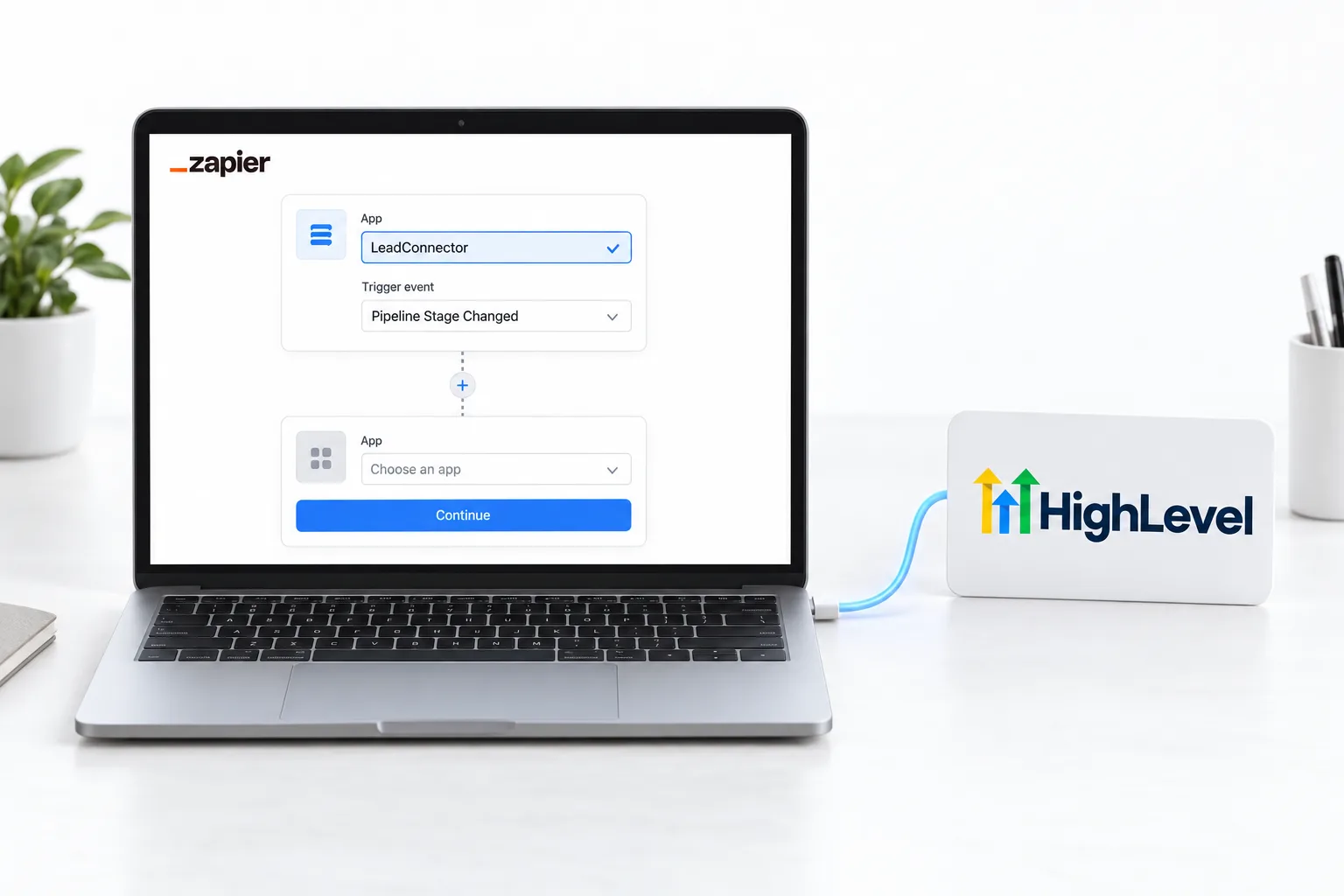
Zapier connects GoHighLevel to apps that have no native integration. In Zapier, HighLevel appears as LeadConnector. You sign in once, pick the subaccount, and build Zaps that move data both ways.
HighLevel, plus thousands of apps.
The short answer
To connect Zapier to GoHighLevel, log in to Zapier, click Create, Zaps, choose LeadConnector as the trigger or action app, pick an event such as Pipeline Stage Changed, click Sign In, log in with your HighLevel credentials and select the subaccount. LeadConnector then appears under Accounts in Zapier.
Michael is a sponsored HighLevel affiliate. Links to HighLevel use his partner link at no extra cost to you. HighLevel prices and product facts on this page come from HighLevel's own pricing page and help center, checked on the date above.
Connect
How do you connect Zapier to HighLevel?
- Log in to Zapier and click Create, then Zaps.
- Click the trigger block and choose LeadConnector.
- Choose a trigger event, such as Pipeline Stage Changed.
- Under Account, click Sign In and log in with your HighLevel email and password.
- Select the subaccount you want to connect.
- Add the action step in the other app, test the Zap and publish it.
Before you Zap
Check for a native option.
Many tools now connect directly, through the HighLevel App Marketplace, inbound webhooks or the API. Native connections are usually faster and do not cost Zapier tasks. Use Zapier when nothing else fits.
Before you start
What do you need before you connect Zapier?
Zapier is the fallback, so check first that you need it. Before you connect it to HighLevel, which Zapier lists as LeadConnector and many people know as GoHighLevel, confirm these.
- A Zapier account
- Your HighLevel email and password, with access to the subaccount
- The name of the exact subaccount to connect
- A clear trigger and action: when this happens, do that
- A check that no native integration or webhook already does the job
Not sure you need Zapier at all? Read GoHighLevel vs Zapier.
Test it
How do you test the Zapier connection?
Zapier has a test step. Use it, then test for real.
- In the Zap editor, test the trigger and confirm Zapier pulls a sample record.
- Test the action step and confirm the record appears in the other app.
- Publish the Zap.
- Do the real thing once, such as moving a test opportunity to a new stage.
- Open the Zap history and confirm the run succeeded.
Common mistakes
What mistakes should you avoid when you connect Zapier?
- Connecting the wrong subaccount. Agencies with many clients pick the wrong one easily. Check the name under Accounts in Zapier.
- Two automations doing one job. A Zap plus a workflow that both create the contact is how duplicates happen.
- Unnamed Zaps. Name every Zap after what it does and which client it belongs to.
- Using Zapier for everything. Native connections and webhooks are usually faster and do not cost Zapier tasks.
- Ignoring failed runs. Check the Zap history when data stops. See fix a Zapier trigger not working.

Name every Zap after what it does and which client it belongs to. Six months from now you will thank yourself.
Questions
Common questions.
How do I connect Zapier to HighLevel?
Log in to Zapier, click Create, then Zaps, and choose LeadConnector as the trigger or action app. Pick an event, click Sign In, log in with your HighLevel email and password and select the subaccount. Then add the action step in the other app, test the Zap and publish it.
What is LeadConnector?
LeadConnector is the name HighLevel uses for its app in Zapier. Search for LeadConnector, not HighLevel, when you pick the trigger or action app. Once you sign in and select a subaccount, LeadConnector appears under Accounts in Zapier. The short version of whether HighLevel integrates with Zapier is yes, through that app.
Why are contacts duplicating?
Duplicates usually mean two automations are doing the same job. A common cause is a Zap plus a HighLevel workflow that both create the contact, or two Zaps on the same trigger. Check your Zaps and workflows, keep one of them and name every Zap after what it does so overlaps are easy to spot.
Do I need Zapier at all?
Not always. Many tools connect directly through the HighLevel App Marketplace, inbound webhooks or the API. Native connections are usually faster and do not cost Zapier tasks, so check for one first. Use Zapier when nothing else fits. You can test both routes during a 30 day GoHighLevel trial through Michael's link.
Why can I not find HighLevel in Zapier?
Zapier lists HighLevel under the name LeadConnector, so a search for HighLevel or GoHighLevel will not show the app you need. Search for LeadConnector, choose it as the trigger or action app, then click Sign In and log in with your HighLevel email and password to connect a subaccount.
When should I use Zapier instead of a webhook?
Use Zapier when the other app has no native integration and you want to set it up without code. Use a webhook when the other app can send or receive one directly, because that route does not cost Zapier tasks. If you are still choosing a plan, see the GoHighLevel plans compared.
Are there alternatives to Zapier for HighLevel?
Yes. See HighLevel with Make, HighLevel with n8n and the full Zapier integration page. Before you add any outside tool, check whether a native integration, the App Marketplace or an inbound webhook already does the job, since those are usually faster and do not cost tasks.
Next step
See it in your own account. Thirty days, every feature.
Start a trial, build the first system and test it before the first invoice. Usage fees for phone, SMS, email and AI can apply during the trial.
HighLevel has three plans at a flat monthly price, each with unlimited users and contacts. See what each one includes and what it costs.
Compare the PlansStarter, Unlimited and Founder