
Home/HighLevel/Agency/Scaling an agency
GoHighLevel agency · Scale
Scaling an agency. Fix the bottleneck, then grow.
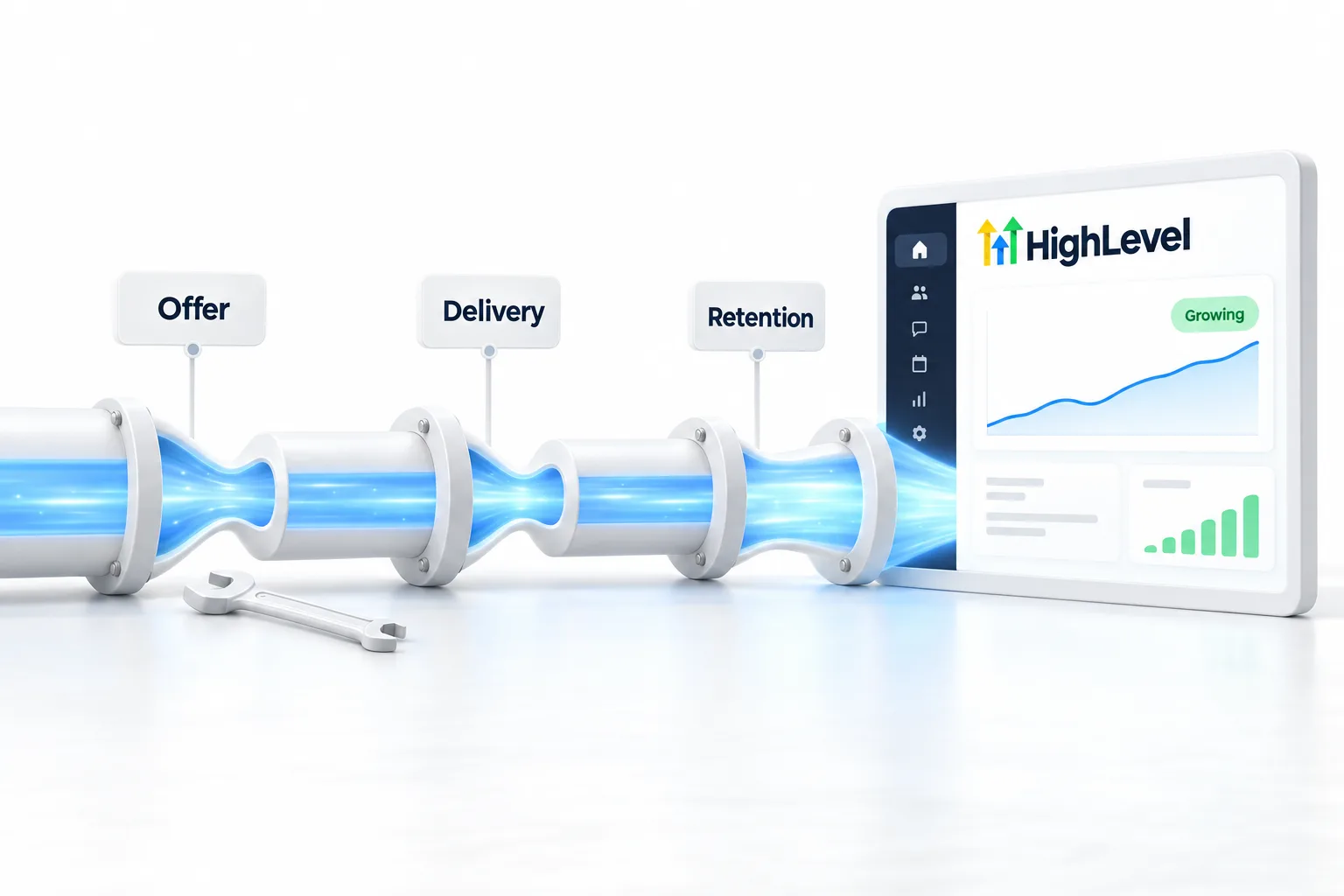
After the first handful of clients, growth stalls for one of three reasons: the offer is fuzzy, delivery depends on you, or clients leave as fast as they arrive. Scaling means fixing whichever one is true for you.
The short answer
To scale an agency past its first milestone: tighten one core offer so sales are repeatable, systemize delivery with snapshots, SOPs and onboarding so it does not depend on you, hire for the current bottleneck, add one more lead channel, and protect retention with reporting. Growth comes from removing whichever constraint is tightest right now.
Michael is a sponsored HighLevel affiliate. Links to HighLevel use his partner link at no extra cost to you. HighLevel prices and product facts on this page come from HighLevel's own pricing page and help center, checked on the date above.
Diagnose
How do you find your bottleneck?
| Symptom | Bottleneck | Fix |
|---|---|---|
| Every sale feels different | Offer | One core offer and one page |
| You do all the delivery | Delivery | Snapshots, SOPs, a VA |
| Clients leave in months | Retention | Onboarding and reporting |
| Not enough calls | Leads | One more channel |
Order
What order should you fix things in?
- Tighten the offer.
- Systemize delivery.
- Hire for delivery.
- Add a lead channel.
- Raise prices for new clients as results prove out.

Definition
What does scaling an agency actually mean?
Scaling is not the same as growing. Growing means more clients and more work in step with each other. Scaling means adding clients without the work rising at the same rate. If your tenth client takes as many of your hours as your second did, you have grown. You have not scaled.
That is why this page does not set a revenue target. A number tells you nothing about whether the business underneath it holds together. An agency can have an impressive month and still be one resignation away from trouble, and a small one can run calmly because every step is written down. The honest view of what agencies earn, and what comes out first, is on agency income reality.
So measure scaling with numbers that describe the machine, not the outcome.
- Hours of delivery per client each month. It should fall as you systemize.
- Time from signed contract to live system.
- Share of clients who stay past the first few months.
- How many tasks only you can do.
Delivery
How do you systemize delivery in GoHighLevel?
Delivery is a common bottleneck at this stage, and the platform has specific tools for it.
| Problem | Tool | What it changes |
|---|---|---|
| Every setup is built by hand | Snapshots and custom values | A new client starts from a tested template |
| Onboarding depends on your memory | A workflow triggered by a won deal or paid invoice | Welcome, intake form and tasks go out automatically |
| Reports take hours | One dashboard duplicated to each subaccount | Monthly reporting becomes reading, not building |
| You pay for client usage | Rebilling | Usage is charged to the client it belongs to |
| Only you know the steps | Written SOPs and limited user access | Someone else can do the work safely |
Work through them in that order, because each one makes the next easier. The details are on create a snapshot, build a client onboarding workflow and agency SOPs. Snapshots also support versions, so when you improve the template you can push the update to accounts already using it.
The plan matters here too. The Starter plan covers up to three subaccounts. An agency adding clients needs Unlimited, and one that wants to sell software plans or mark up usage needs the Founder Plan. The upgrade guide explains when each step makes sense.
Team
Who should you hire first and when?
Hire for the constraint you have, not the company you imagine. The first hire is usually delivery help, because it is the work that repeats and the work you can write down.
- First, a VA for one repeatable delivery job, such as testing workflows or loading snapshots. See hiring your first VA.
- Next, more delivery jobs for the same person, or a second VA, as the guides get written.
- Then someone to own client communication and monthly reviews, once you have enough clients that your own replies are slowing down.
- Sales help comes last. Until the offer sells the same way every time, nobody else can sell it for you.
Before each hire, ask whether the problem is really capacity. If clients are leaving, a bigger team just serves a leaking base faster. Fix client retention first. If sales calls all go differently, tighten the core offer first. And if you would rather not manage people yet, fulfillment services can take whole builds off your plate while you keep the client relationship.
If you want help with this stage, the Scaling an AI Agency program works through the offer, snapshots and delegation over several weeks. Every earlier step is laid out in the GoHighLevel agency path.
Plan choice matters more as you grow. GoHighLevel plans compared shows the differences, and HighLevel Founder Plan explained with the Founder Plan, formerly Agency Pro page explain when the top plan makes sense. A new account starts with the GoHighLevel 30 day trial through Michael's link.

Scaling a messy agency just makes a bigger mess. Systemize first, then grow.
Questions
Common questions.
How do I scale my agency?
Tighten one offer, systemize delivery, hire for the bottleneck, add a channel and protect retention. Start by finding which constraint is tightest right now: a fuzzy offer, delivery that depends on you, or clients leaving as fast as they arrive. Fix that one first, because effort spent elsewhere will not move the number.
When should I hire?
When delivery is the bottleneck and your SOPs are written. A hire without written steps needs you beside them, which adds to your workload. Write the SOP, do the task from it yourself once, then hand it over. Hire for one job at a time and review the work weekly.
Should I add more services?
Usually not until one offer is repeatable. Each new service adds a new demo, a new build and new support questions. If the first offer sells and delivers the same way every time, the next service should be the next problem your existing clients already have.
How do snapshots help?
They make each new client setup fast and consistent. A snapshot copies your tested workflows, calendars, pipelines and other assets into a new subaccount, so every client starts from the same build. You then change only the details for that business, which also makes it possible to hand setup to a VA.
What is the difference between growing and scaling an agency?
Growing adds clients and work together. Scaling adds clients without the work rising at the same rate, through systems, snapshots and delegation. A simple test is whether your own hours per client are falling while the number of clients rises.
What should I track when scaling?
Delivery hours per client, time from signature to launch, how long clients stay and how many tasks only you can do. Review these four numbers every month. Whichever one is getting worse usually points to the bottleneck you should fix next.
Which HighLevel plan do I need to scale?
Unlimited removes the subaccount cap. The Founder Plan adds selling your own software plans and a markup on usage. Starter covers up to three subaccounts, so a growing agency moves to Unlimited first, then to the Founder Plan when markup across its clients covers the difference in price.
Keep reading
Related pages.
Next step
See it in your own account. Thirty days, every feature.
Start a trial, build the first system and test it before the first invoice. Usage fees for phone, SMS, email and AI can apply during the trial.
HighLevel has three plans at a flat monthly price, each with unlimited users and contacts. See what each one includes and what it costs.
Compare the PlansStarter, Unlimited and Founder