
Home/Founders/What is a co Founder
Founders · Co Founders
What is a co Founder? A partner in ownership and outcome.
A co Founder is someone who starts the company with you and shares both the ownership and the responsibility. A good one doubles what the company can do. A bad fit can end it. Here is what the role is and how to think about it.
The short answer
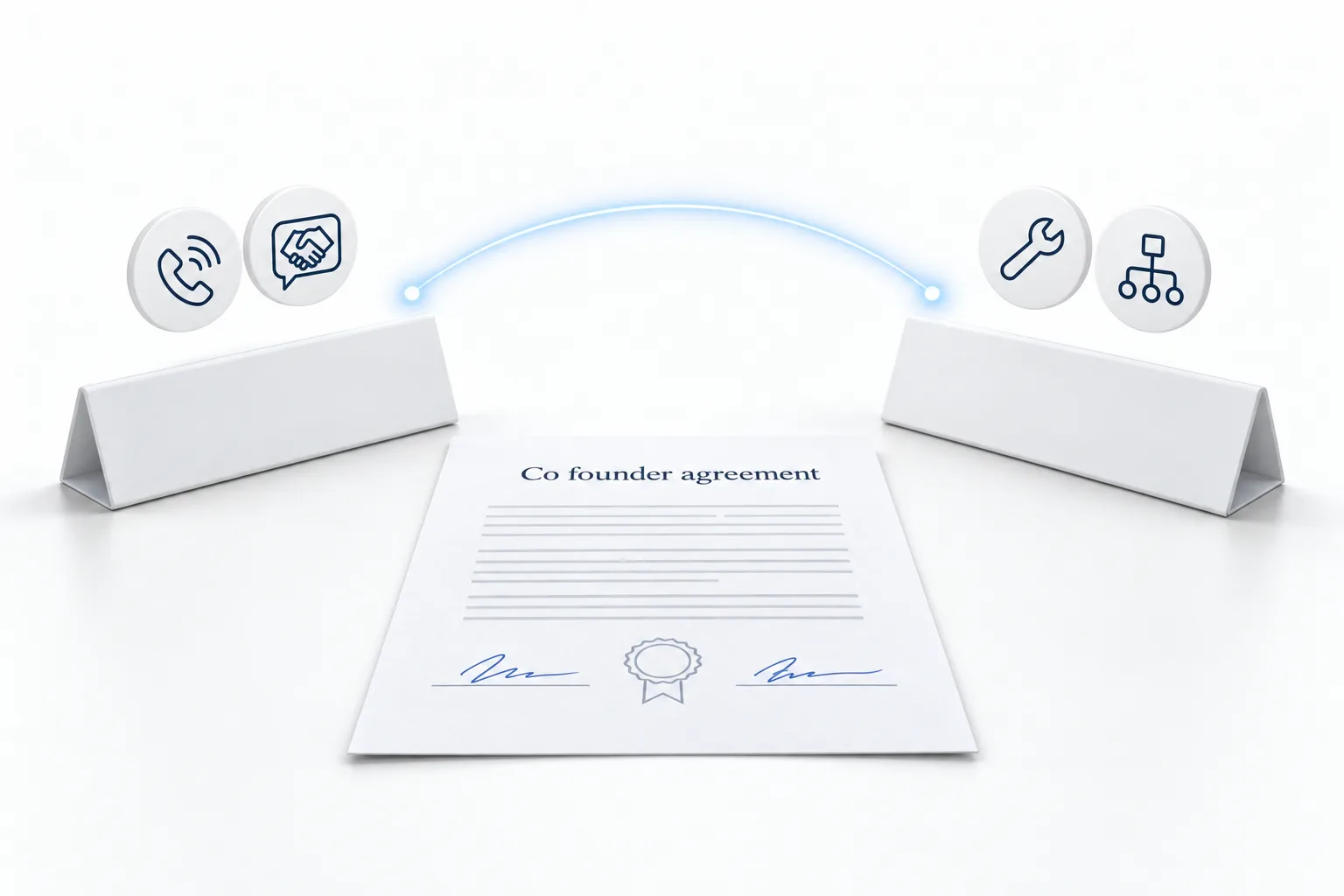
A co Founder is a person who starts a company alongside one or more Founders, takes on a core role and shares both ownership, usually through equity, and responsibility for the outcome, often bringing a skill the other Founders lack. Put roles, equity, vesting and what happens if someone leaves into a written agreement reviewed by an attorney.
Essentials
What should co Founders agree in writing?
- Roles and decision rights
- Equity split
- Vesting over time
- What happens if someone leaves
- How disagreements are resolved
Do you need one
When does a co Founder help?
A co Founder helps when the business needs two core skills you cannot cover with systems or hires, or when the load is too much for one person. Many service and AI businesses start with a solo Founder and add partners or senior hires later.

Choose a co Founder the way you would choose a business partner for ten years, because that is what it is.
The role
What does a co Founder actually do?
A co Founder owns a whole area of the company, not a list of tasks. In a two person team that often divides along a simple line: one faces customers and one builds what is sold.
- Selling and relationships. Finding customers, running sales conversations and looking after accounts.
- Building and delivery. Creating the product or service and making sure it works.
- Operations and money. Billing, contracts, hiring and the systems that hold it together.
The exact split matters less than its clarity. Each area needs one person with the final say, and both people need to know who that is. Shared responsibility for everything usually means slow decisions and things that fall between two chairs.
A co Founder also shares the weight. They take the risk with you, work before there is money and stay through bad months. That is what separates them from an early employee, who is paid for a job, or a contractor, who is paid for a result.
Ownership
How do equity and vesting work between co Founders?
Equity is ownership of the company. How it is divided is a decision for the Founders, and there is no rule that it must be equal. Teams usually weigh what each person brings and will keep bringing: time, money, skills, relationships and the original work.
Vesting means ownership is earned over time instead of handed over on day one. If a co Founder leaves early, they keep only the part they earned. It protects everyone, including the person who stays and the company itself. Without it, someone who leaves after a few months can hold a large share of a business they are no longer building.
These terms belong in a written agreement prepared with an attorney. The details depend on your business structure and your state. This page is general information, not legal advice. The Founder legal basics page covers the structure side.
Other options
What are the alternatives to a co Founder?
A co Founder is one way to fill a gap. It is also the hardest to undo. Before you share ownership, check whether something lighter would do.
- A contractor for a defined project or skill.
- An employee once revenue supports a salary.
- An advisor for judgment and experience you lack.
- AI and automation for routine work such as answering, follow up and reporting.
- A community of other Founders for perspective.
Many service and AI businesses start with one Founder and these supports. If the gap is a core skill the company needs every day for years, a partner is worth the search. The solo Founder AI stack shows how much routine work systems can carry, and the community access page explains the community that comes with a HighLevel account started through my link.
For the difference in titles, see co Founder vs Founder, and for the search itself, how to find a co Founder. The Founder hub explains the Founder role more widely.
Whether you build alone or with a partner, you can test a first system together in one account. The GoHighLevel 30 day trial through Michael's link gives you that, GoHighLevel plans compared shows the plan options, and the Founder Plan FAQ covers the top plan.
Questions
Common questions.
What is a co Founder?
A co Founder is someone who starts a company with you, takes on a core role and shares both ownership and responsibility for the outcome. Ownership is usually held as equity. A good co Founder brings a skill the others lack, such as sales or delivery, and stays accountable when things go wrong.
How is equity split between co Founders?
It varies, and there is no standard split. Co Founders usually agree shares based on role, time commitment and what each person brings, then put the split in writing with vesting, so equity is earned over time. An attorney should draft or review the agreement before anyone starts work.
Do I need a co Founder?
Not always. Many Founders start solo. A co Founder helps when the company needs a core skill you lack and cannot hire, contract or automate. If the gap can be filled by a contractor, an advisor or AI, you keep full ownership and can still add a partner later.
What is the difference between a co Founder and a business partner?
The terms overlap. Co Founder usually means someone who helped start the company. Business partner is broader and can include someone who joined or invested later. What matters is what the written agreement says about ownership and decisions, not the title.
Can a company have more than two co Founders?
Yes. Larger teams exist, though more people means more to agree on. Clear roles and a written agreement matter even more. Decide early who makes the final call in each area, because shared ownership without clear decision rights slows a young company down.
What happens if a co Founder leaves?
The written agreement decides. With vesting, they keep only the equity they earned. The agreement should also say how their role and any remaining share are handled. Without a written agreement, the answer depends on local law and can be costly to sort out.
Next step
See it in your own account. Thirty days, every feature.
Start a trial, build the first system and test it before the first invoice. Usage fees for phone, SMS, email and AI can apply during the trial.
HighLevel has three plans at a flat monthly price, each with unlimited users and contacts. See what each one includes and what it costs.
Compare the PlansStarter, Unlimited and Founder