
The short answer
To find a co Founder: define the gap you need filled, such as sales or delivery; look where builders already are, including past colleagues, Founder communities and client relationships; work on a trial project together before committing; and agree roles, equity and vesting in writing with an attorney's help.
Steps
What are the four steps to finding a co Founder?
- Write down the skill and the work you need a partner for.
- Look among past colleagues, Founder communities and people you already serve.
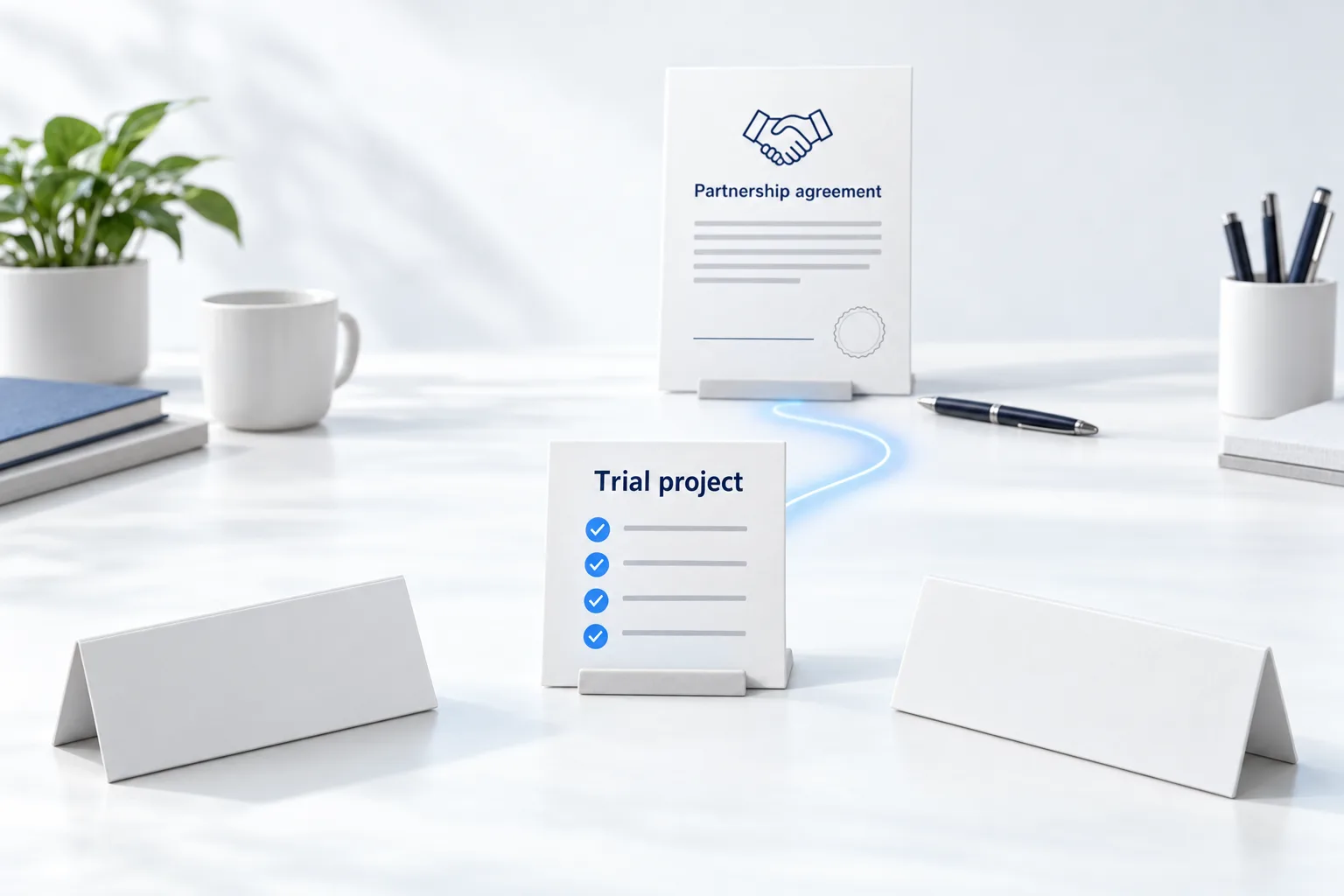
- Run a trial project for a few weeks.
- Agree roles, equity, vesting and exit terms in writing.
Fit
What should you look for in a co Founder?
- Skills that cover your gaps
- Shared values about how to treat customers
- A similar appetite for risk
- The same picture of the company in five years

A trial project tells you more in three weeks than three months of coffee meetings.
Before you search
Do you need a co Founder at all?
Ask this first, because the search takes time and the wrong partner costs more than no partner. A co Founder is the right answer to some gaps and the wrong answer to others.
- A missing skill you need every day. If you can build but cannot sell, or the reverse, a partner may be the answer.
- A task you need done sometimes. Design, bookkeeping or a single integration is a contractor, not a partner.
- Routine work that is piling up. Answering, follow up and reporting can go to AI and automation.
- Loneliness or doubt. A community or an advisor helps with that without sharing ownership.
If only the first applies, keep going. If the others describe your situation, what is a solo Founder and the solo Founder AI stack show how far one person can get.
The test
How do you run a trial project?
A trial project is a small piece of real work you do together before any equity changes hands. It shows how the other person behaves under a deadline, which a conversation cannot.
- Choose something with a clear finish, such as landing one client or building one system.
- Agree in writing who does what, how long it runs and who owns the result.
- Decide how any money earned during the trial is split.
- Meet on a fixed schedule and say plainly what is and is not working.
- At the end, each of you answers one question separately: would I do this again?
Watch for the ordinary things. Do they do what they said by when they said? Do they tell you bad news early? How do they treat the customer? Skills can be learned. Those habits rarely change.
Before you sign
Which conversations should you have before you commit?
Most partnerships that fail were never aligned on a few basic points. Talk through each one and write down what you agree.
- How much time each of you will give, and whether either keeps another job.
- What each of you needs to earn, and when.
- What happens if one of you wants to leave, or stops contributing.
- Who has the final say in each area.
- What you each want the company to become.
Then take those notes to an attorney and have them turned into an agreement with roles, equity and vesting. The what is a co Founder page lists what the agreement covers, co Founder vs Founder explains how titles work, and Founder legal basics covers the business structure underneath it. This page is general information, not legal advice.
If you are still choosing what to build, how to find a business idea with AI comes before the partner search, and the Founder hub covers the role you would be sharing. A trial project needs somewhere to build: the GoHighLevel 30 day trial through Michael's link gives you both an account to work in, GoHighLevel plans compared shows the plan options, and the Founder Plan FAQ explains the top plan.
Questions
Common questions.
Where do I find a co Founder?
Look first among people you have already worked with: past colleagues, clients and collaborators. Founder communities and industry events are the next place, because the people there are already building. Start from the gap you need filled, such as sales or delivery, so you are searching for a skill and not just a partner.
How do I know if a co Founder fits?
Work on a real project together first. A trial project of a few weeks shows how the person handles deadlines, disagreement and dull work, which no interview reveals. If the work goes well and you still want to build with them afterward, that is a better signal than shared enthusiasm.
What should a co Founder agreement include?
A co Founder agreement should cover roles and decision rights, equity split, vesting, time commitment, who owns the work produced and what happens if someone leaves. Put it in writing before the business has value to argue over, and have an attorney draft or review it, since the right terms depend on your situation.
Should I start a company with a friend?
You can, but run a trial project first and put the agreement in writing as you would with anyone else. Friendship does not replace clear roles and exit terms. Have the awkward conversations about money and control early, while they are still easy.
How long should I work with someone before making them a co Founder?
Long enough to finish a real piece of work together and see how they handle pressure. A trial project of a few weeks is a common starting point. If you cannot finish a small project together, you have your answer without a legal problem.
What if I cannot find a co Founder?
Start alone. Many service and AI businesses begin with a solo Founder, with contractors, AI and a community filling the gaps. You can add a partner later. Starting alone also means a future partner joins something real instead of an idea.
Next step
See it in your own account. Thirty days, every feature.
Start a trial, build the first system and test it before the first invoice. Usage fees for phone, SMS, email and AI can apply during the trial.
HighLevel has three plans at a flat monthly price, each with unlimited users and contacts. See what each one includes and what it costs.
Compare the PlansStarter, Unlimited and Founder