
The short answer
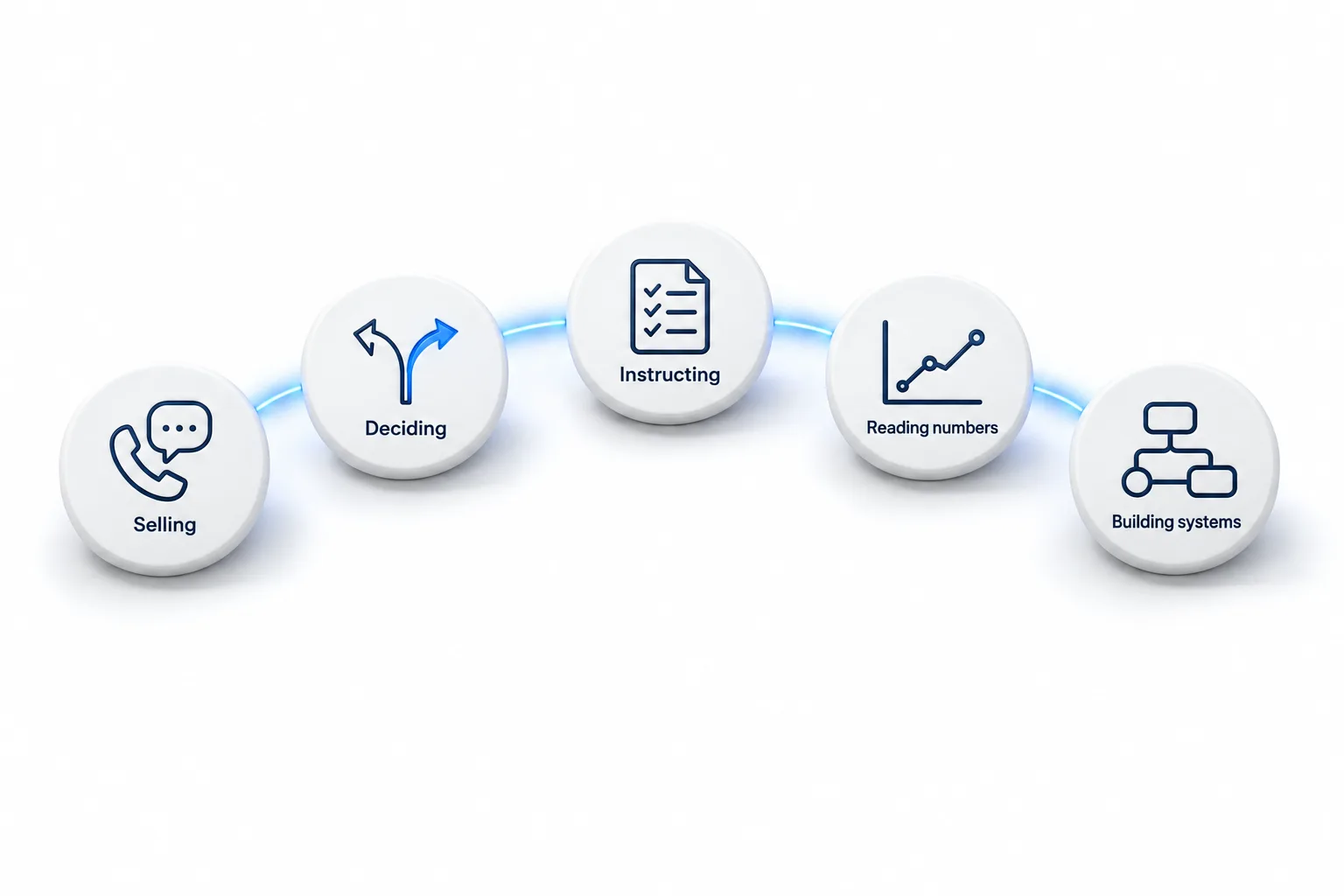
The five skills Founders need most are selling, because nothing happens without revenue; deciding, including saying no; writing clear instructions for people and AI; reading numbers to know what is working; and building systems so work happens without the Founder. Most other skills can be hired, outsourced or handed to AI.
The five
What does each skill look like in practice?
| Skill | In practice | How to build it |
|---|---|---|
| Selling | Getting a stranger to pay | Make offers every week |
| Deciding | Choosing what not to do | Write decisions down and review them |
| Instructing | Briefs and prompts that work the first time | Rewrite every instruction that failed |
| Reading numbers | Knowing your five numbers weekly | A Monday review |
| Building systems | Repeated work runs without you | One system per repeated task |
Let go
Which skills can you hand off?
- Design, with templates and a graphics team or AI Studio
- Bookkeeping, with a bookkeeper
- First drafts of content, with AI
- Routine follow up, with automation

If you only build one of these, build selling. Every other skill can be learned once there is revenue to pay for it.
The newest skill
Why is writing clear instructions a core skill now?
Founders have always had to brief people. What is new is that much of the work now goes to AI agents, and an agent does exactly what the instructions say, including the unclear parts.
A person fills gaps with common sense. Tell a receptionist to book new patients and they will know not to book one at midnight. An AI agent needs the hours stated. That discipline turns out to help everywhere. An instruction clear enough for an agent is also clear enough for a contractor, a new hire or a client.
Good instructions share a shape. They say who is doing the job, what a good result looks like, what must never happen and when to ask for help. Write them, test them on a real case and rewrite the part that failed. The voice agent prompt framework applies that to Voice AI in HighLevel, and the AI prompt library has worked examples.
The first skill
How do you practice selling if you dislike it?
Most new Founders do. It helps to see selling as a conversation about a problem, not a performance.
- Ask about the problem and listen. Most of a good sales call is the other person talking.
- Repeat back what you heard, in their words.
- Describe what you would do and what it costs. Plainly.
- Ask whether they want to start.
- Stay quiet and let them answer.
The fourth step is where people freeze, and it is the only one that makes a sale. Practice it on small offers until it stops feeling like a risk. You will hear no often. Each one usually tells you something about the offer, the price or the buyer, which makes the next conversation better.
Priorities
Which skill should you build first?
It depends on what is holding the business back today.
- No customers yet: selling. Nothing else matters until someone pays.
- Customers but chaos: building systems. Start with the task you repeat most.
- Busy but unsure it is working: reading numbers. Choose a few and check them weekly.
- Stuck between options: deciding. Set a deadline and write the decision down.
- AI agents or staff getting it wrong: writing instructions.
Work on one at a time. A month of deliberate practice on a single skill moves a business more than dabbling in five. The Founder time audit shows which tasks are taking your hours, and how Founders use AI agents shows where the instruction skill gets used on GoHighLevel.
Two skills people assume they need turn out to be optional. Do you need to be technical explains why code is not required, and do you need an idea to be a Founder covers starting without an original one. The Founder hub puts the skills in context.
Building systems is easier to practice in a real account. The GoHighLevel 30 day trial through Michael's link gives you one, GoHighLevel plans compared shows the options, and the Founder Plan FAQ explains the top plan.
Questions
Common questions.
What is the most important Founder skill?
Selling, followed by deciding what not to do. Nothing else in the company matters until someone pays, and only the Founder can do the first sales well, because those conversations shape the offer. Deciding comes next: saying no to work, customers and ideas that pull the company off course.
Do Founders need to be good at everything?
No. Founders need to be good at a few things only they can do: selling, deciding, writing clear instructions, reading numbers and building systems. Everything else can be hired, outsourced or handed to AI. Trying to master every skill slows the company more than any weakness does.
Is prompting a Founder skill now?
Writing clear instructions is, and prompting is one form of it. The same skill briefs an employee, a contractor or an AI agent: say what the goal is, what good looks like and what to do when something unexpected happens. Founders who write clearly get better work from people and from AI.
Can Founder skills be learned?
Yes. Each of the five improves with practice. Selling and deciding improve fastest when you do them weekly with real customers and real stakes. Writing instructions and reading numbers improve when you review the results every week and fix what was unclear.
Do Founders need marketing skills?
Basic marketing helps, but early on it matters less than direct selling. Once an offer sells in conversation, you will know what to say in your marketing. When you do start marketing, begin with one channel you can keep up every week.
How long does it take to get good at selling?
It varies by person. Most people improve once they have made the same offer many times and learned which questions and objections come up. Keep short notes after every conversation, so the pattern shows up sooner and you stop repeating the same mistakes.
Next step
See it in your own account. Thirty days, every feature.
Start a trial, build the first system and test it before the first invoice. Usage fees for phone, SMS, email and AI can apply during the trial.
HighLevel has three plans at a flat monthly price, each with unlimited users and contacts. See what each one includes and what it costs.
Compare the PlansStarter, Unlimited and Founder