

In this video Michael Reimer asks Founders one question: what did you fail at this week? He explains why new agency Founders delay launching, why failures are a scoreboard of attempts, and how to fail forward without being careless. It is for Founders building AI agencies on GoHighLevel who keep waiting for perfect.
The question comes from a story. Michael tells of a well known Founder who heard it at her own dinner table growing up. Her dad would go around the table and ask the kids what they had failed at that week. If nobody had failed at anything, he was disappointed. In most houses, failing is the thing you hide. In hers it was celebrated, because it meant you tried something. Years later she started her company with her own savings, no business degree and no background in the industry. She was told no over and over, and she kept going.
Why do new agency Founders put off launching?
Michael coaches a lot of Founders who are building AI agencies on GoHighLevel. They are smart and they work hard, and he sees the same thing again and again. They are terrified of failing in front of a client. What if the automation breaks? What if the voice agent says something weird? What if a client asks something I cannot answer, or I charge them and it does not work?
So they do not launch. They keep testing. They build one more snapshot, because there is always one more feature to learn or one more video to watch, and they wait until it is perfect. Michael says he understands, because nobody wants to look bad. Then he says the part they need to hear. In this business you are going to fail, because every one of us does. He has built a lot of AI systems, and some of them did not work the first time. Some did not work the second time either. The difference between the Founders who make it and the ones who quit is not that one group fails less. It is what they do with it. His video on learning through execution makes the same argument from the other side.
What does it mean to treat failures as a scoreboard?
Imagine your failures are a scoreboard. Not a scoreboard of how bad you are, but of how many times you got in the game. Zero failures this week means zero attempts. You made no calls and sent no offers. Three failures means you had three real chances to win, and you learned three things nobody can teach you in a course.

What does a small failure teach you?
Michael's example is a first missed call text back for a local plumber. You build it and turn it on. In the first week the owner calls, angry, because his customers are getting the text even when they called twice in a row.
Is that a failure? Sure, a small one. But now you know something about how that system behaves in the real world. You fix it, and you set it up better for the next client. The next time an owner asks about it, you answer like somebody who has done it, because you have. That is how experience gets built. Not in theory, but in small, slightly embarrassing moments where something did not go the way you planned.
Is failing forward the same as being careless?
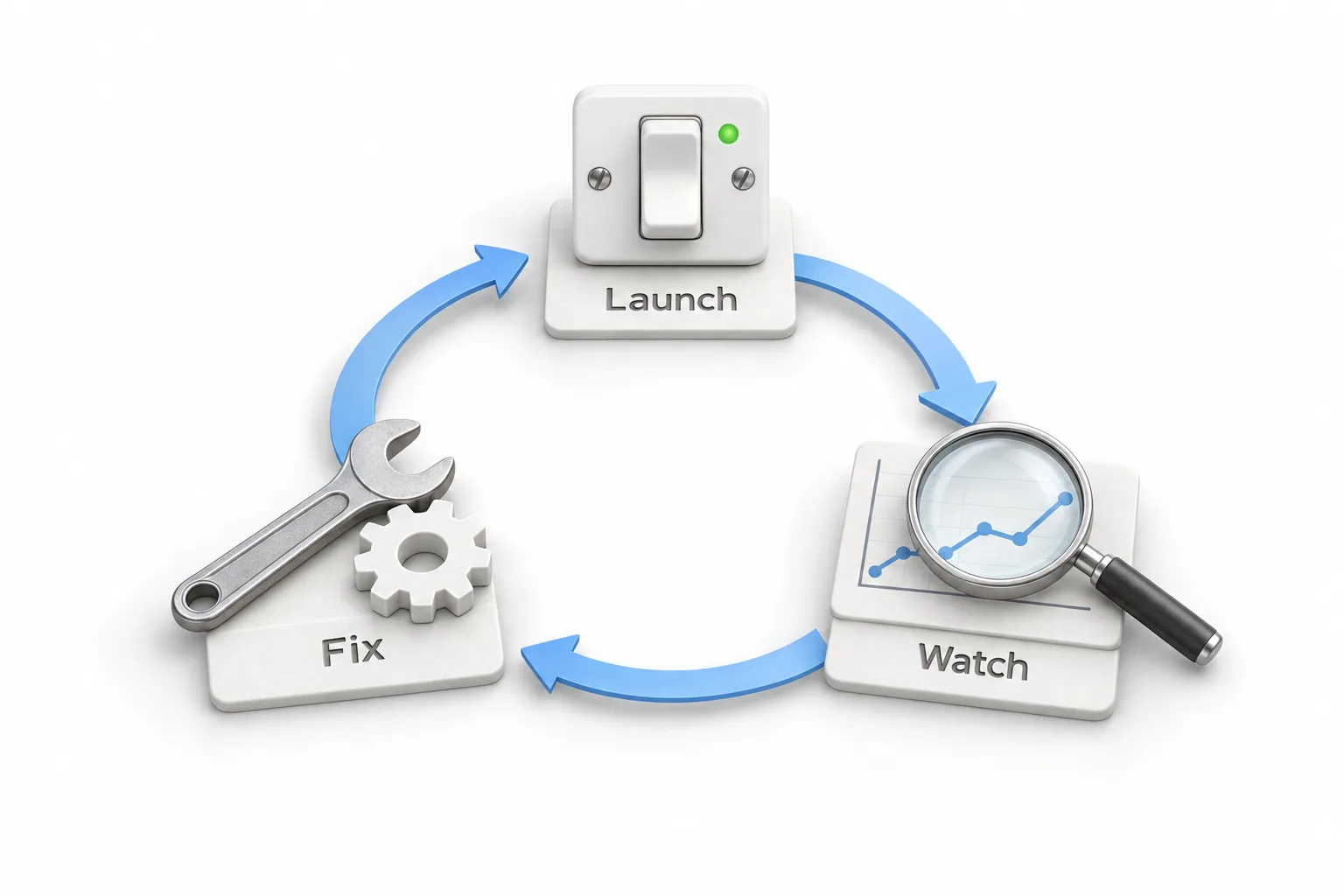
No, and Michael is clear about it. You still test. You still set expectations with your client. You tell them you are going to launch this and watch it closely for the first two weeks, so you can make it better together.
He says owners hear that and think, finally, somebody who is honest with me. They are business owners too, and they fail every week. They hire the wrong person, buy the wrong equipment or run an ad that does not work. They do not need you to be perfect. They need you to show up and fix what breaks, so their business keeps getting better.
How do you use the question each week?
The challenge from the end of the video, with the guardrails Michael adds.
- Ask the question. At the end of each week, ask yourself what you failed at this week.
- Launch one thing. If the answer is nothing, pick something you have held back because it is not perfect yet and launch it: make the call, send the offer or turn on the automation.
- Test first. Before launch, still test the system and set expectations with your client.
- Promise two weeks of attention. Tell the client you will launch it and watch it closely for the first two weeks so you can improve it together.
- Write down the lesson. When something breaks, note what you learned and fix it.
- Carry it forward. Use what you learned to set up the next client better, so you answer questions as someone who has done it.
What changes when nothing is your warning sign?
A week with no failures stops looking like a good week. It becomes the sign that you did not try anything, and the fix is to launch the one thing you have been holding back. If it breaks, Michael says, that is great. Write down what you learned, fix it and go again.
Over time the small failures add up to experience clients can hear when you answer them. His closing line is that success does not come from never failing. It comes from failing forward, fast and often enough that you finally get it right. For the patterns worth avoiding from the start, read the page on Founder mistakes.
If launching means picking a platform first, start a GoHighLevel 30 day trial through Michael's link and build one small system this week. If you are still comparing options, see the best HighLevel alternatives.