
Founders · Comparison
Founder vs CEO. A history and a job.
Founder describes how a company began. CEO describes a job: running the company and answering to its owners or board. One person can be both, and in small companies usually is. Here is the difference and why some Founders choose the Founder title on purpose.
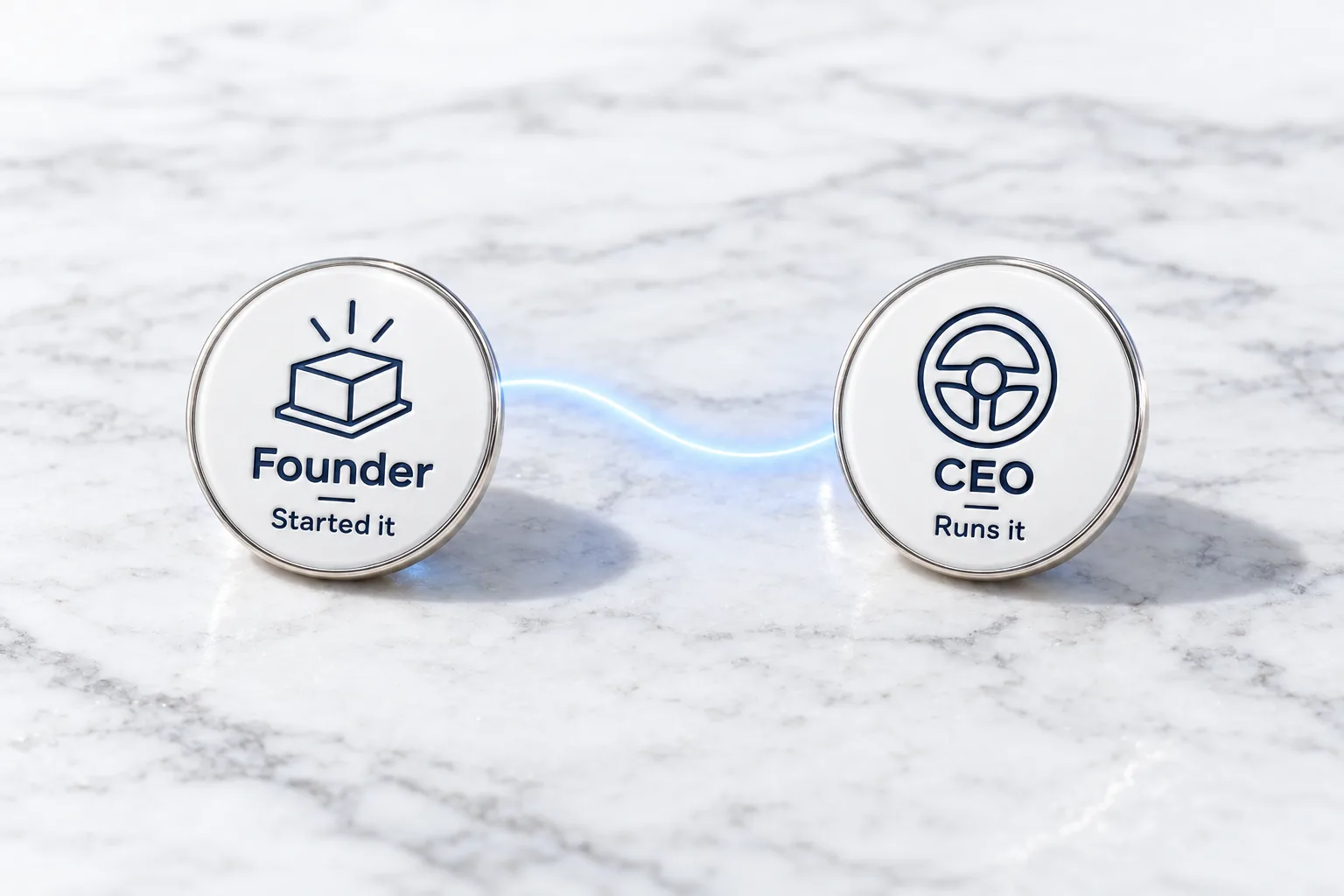
The short answer
A Founder is a person who started the company. The title describes its origin and never changes. A CEO is the chief executive officer, the role that runs the company and answers to its owners or board. In small companies one person is usually both. As a company grows, the CEO role can pass to someone else.
Side by side
What is the difference between a Founder and a CEO?
| Founder | CEO | |
|---|---|---|
| What it describes | Who started the company | Who runs the company |
| Can change | No | Yes, CEOs can be hired or replaced |
| Accountable to | Themselves and co Founders, early on | The owners or board |
| Focus | Vision, product and culture | Strategy, execution and results |
Choosing a title
Why do some Founders skip the CEO title?
In small and Founder led businesses, many owners use Founder because it signals ownership and builder identity rather than corporate hierarchy. I use Founder for exactly that reason.

My title is Founder, and it always will be. It describes what I do: build the company and the systems it runs on.
As companies grow
When do the Founder and CEO roles split?
In a new company there is nothing to split. The person who started it also sells, delivers, hires and signs the checks. Calling that person Founder, CEO or owner changes nothing about the work.
The roles separate when running the company becomes a different job from building it. That tends to happen as the team grows, when outside investors join or when the Founder would rather stay close to the product or the customers than manage operations. At that point some Founders hire a CEO and take another role. Others grow into the CEO job and keep both.
Neither path is a promotion or a demotion. A Founder who hands over the CEO role is still the Founder. A hired CEO never becomes one. The first is a fact about history and the second is a position that can be filled.
Small companies
Which title should you use in a small business?
Use the one that tells people the truth about what you do. A few things are worth weighing.
- What customers need to know. In a small company, buyers mostly want to know they are talking to the person who can decide. Founder and owner both say that.
- What your documents say. Legal authority comes from your formation documents, not your business card. An LLC may name members or managers, and a corporation names officers. Ask your attorney which formal titles apply.
- How large you really are. A chief executive title implies there are other executives. On a team of one or two it can read as bigger than the business is.
- What you want to be known for. Founder points to building. CEO points to managing.
If you have partners, settle titles together. The co Founder vs Founder page covers how teams handle that.
After the handoff
What does a Founder keep doing?
Whatever the title, some work stays with the Founder for as long as they are involved. It is the work described across this section of the site.
- Deciding what the company is for and who it serves.
- Choosing which systems run the business. For that decision, the HighLevel review, HighLevel plans compared and the Founder Plan FAQ cover the platform this site is built around, and the 30 day trial through Michael's link lets you test it.
- Keeping an eye on a short list of numbers every week.
- Staying close enough to customers to hear what is changing.
A CEO, whether that is you or someone you hire, turns those decisions into plans, people and results. The page on what a Founder does all day shows how the week divides, and Founder vs entrepreneur covers the other comparison people ask about.
Questions
Common questions.
What is the difference between a Founder and a CEO?
Founder describes who started the company. CEO, chief executive officer, is the role that runs it and answers to the owners or board. The Founder title describes origin and never changes, while the CEO role can pass to someone else as the company grows.
Can a Founder be the CEO?
Yes. A Founder can be the CEO, and in small companies one person is usually both. In a new company there is nothing to separate. The roles can split later, as the company grows and the CEO role passes to someone else.
Can a Founder stop being a Founder?
No. The Founder title describes history, so it cannot be taken away or handed on. A person who started the company is always its Founder, even after leaving. The CEO role is different: CEOs can be hired or replaced, and the job can change hands.
Can a company have a Founder and a separate CEO?
Yes. Many companies do. The Founder may stay in another role, such as leading product or serving on the board, while a hired CEO runs daily operations. Neither path is a promotion or a demotion. It is a choice about which work the Founder keeps.
Is Founder a legal title?
Not usually. It describes who started the company. Legal roles such as member, manager, director or officer come from your formation documents. If you need to know who can sign or decide, look at those documents, not at the title on a business card.
Should a solo business owner use the CEO title?
They can. Many choose Founder or owner because it describes the role more plainly in a small company. Pick the title that is accurate and use it consistently on the website, in email and on documents. Michael's own title is Founder.
Next step
See it in your own account. Thirty days, every feature.
Start a trial, build the first system and test it before the first invoice. Usage fees for phone, SMS, email and AI can apply during the trial.
HighLevel has three plans at a flat monthly price, each with unlimited users and contacts. See what each one includes and what it costs.
Compare the PlansStarter, Unlimited and Founder