The short answer
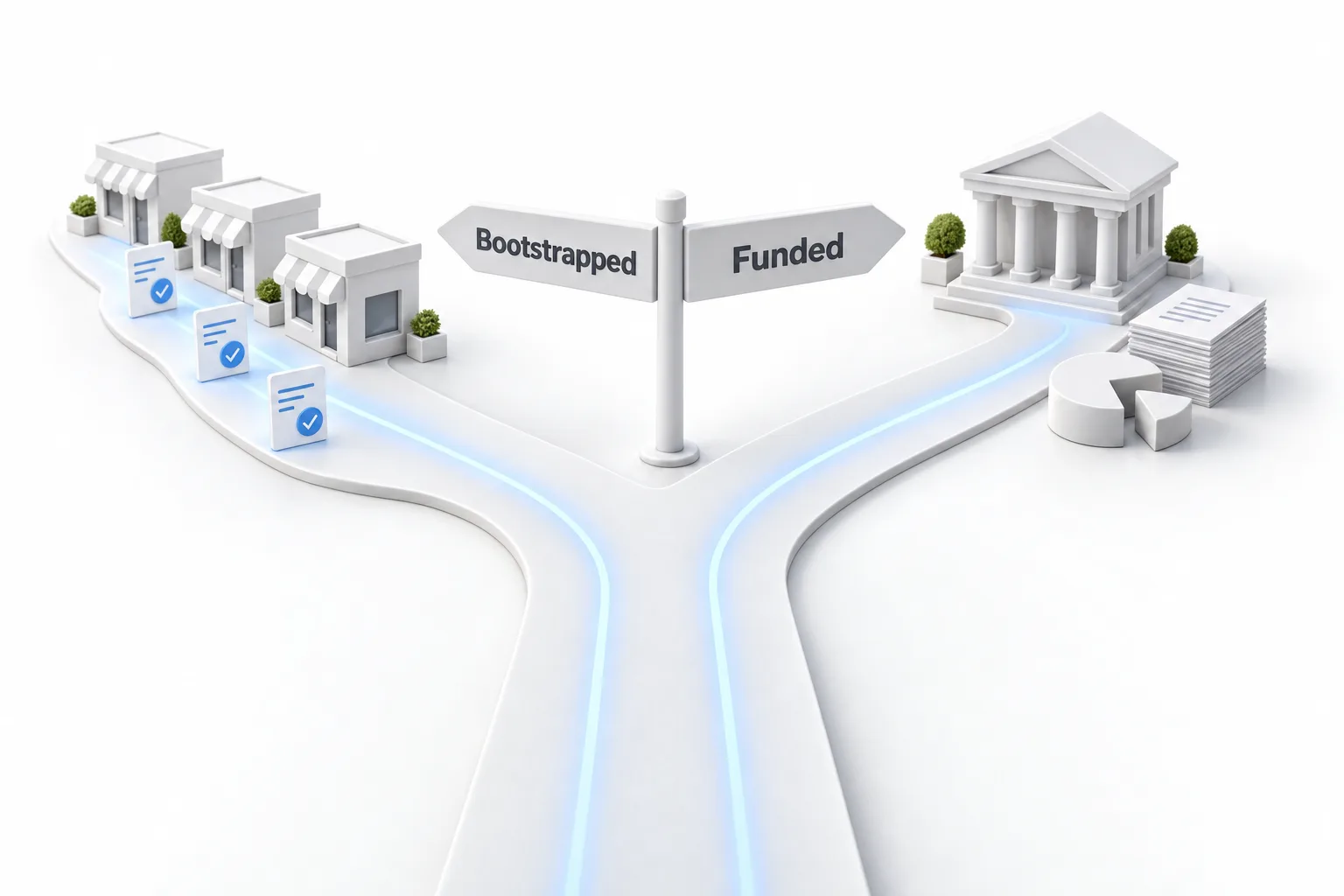
Bootstrapping means funding the business from revenue and savings, so you keep control and ownership and grow at the pace customers allow, while funding means raising outside capital from investors or lenders to grow faster, in exchange for equity, debt and obligations. Service and AI systems businesses often bootstrap, because they can earn revenue early with low costs.
Side by side
What are the trade offs of bootstrapping vs funding?
| Bootstrapping | Funding | |
|---|---|---|
| Control | You keep it | Shared with investors |
| Speed | Paced by revenue | Faster with capital |
| Pressure | Profitability early | Growth targets |
| Best for | Service and systems businesses | Capital intensive or winner take all markets |
Decide
Which questions help you decide?
- Can customers pay for growth?
- Does speed decide who wins your market?
- Are you willing to answer to investors?
- Do you need money to build the product at all?

For a service or AI systems business, customers are the best early investors. They pay you and they tell you what to build.
In practice
How does bootstrapping work day to day?
Bootstrapping is a discipline more than a funding choice. Every expense has to be paid by a customer or by your own savings, so you sell early and spend late.
- Sell before you build. A paid pilot funds the first version.
- Keep fixed costs small. One platform, no office and no staff until the work demands it.
- Charge setup fees. They cover the build so monthly revenue is not carrying it.
- Reinvest in the thing customers ask for most, not the thing you find most interesting.
The cost is speed. You grow as fast as customers pay, and some months that feels slow. The benefit is that every decision stays yours. The how much money do you need page breaks down what a lean start costs.
The other side
When does outside funding make sense?
Funding fits when money is the thing standing between you and a working business. That is true if the product needs heavy development before anyone can pay for it, if you need inventory or equipment, or if the market rewards whoever gets big first.
Funding comes in different forms, and they carry different obligations. Equity investors own part of the company and expect it to grow in value. A loan must be repaid on schedule whether the business grows or not. Revenue from customers carries no obligation beyond delivering what you sold.
For AI Founders
Why do most AI service businesses bootstrap?
Because the expensive part already exists. You are not paying to build AI models or a CRM. You rent them. On HighLevel, the platform plan is a fixed monthly cost and usage rises with client activity. The platform is the main fixed cost. The HighLevel review covers what you get, HighLevel plans compared shows the monthly price of each plan, and the 30 day trial through Michael's link lets you build the first system before you pay for a plan.
That changes the math. With low fixed costs, a small number of monthly clients can cover the business. There is little for an investor's money to speed up in the early stage, because the limit is how fast you can sell and deliver, not how much you can spend.
If you later turn the service into software and want to grow faster than revenue allows, the question comes back. By then you have customers and numbers, which puts you in a stronger position to decide. The AI startup ideas and first 90 days pages cover those stages, and the HighLevel pricing page shows the fixed cost you are planning around. The Founder Plan FAQ covers that step.
Questions
Common questions.
What is bootstrapping?
Bootstrapping means growing a business from revenue and savings without outside investors. You keep control and ownership, and you grow at the pace customers allow. In practice it means selling before you build, keeping fixed costs small and reinvesting what customers pay you.
Should I raise money for an AI agency?
Usually not. Most AI agencies can bootstrap, because they earn revenue early and have low costs. The expensive part, the platform, already exists, so a paid pilot and a setup fee can fund the first build. Funding fits better when money is the thing standing between you and the product.
What are the downsides of funding?
The downsides of funding are shared control, pressure to hit growth targets and obligations to investors or lenders. Equity gives investors a share of the company, and debt has to be repaid with interest. In return you get speed, which only matters if speed decides who wins your market.
Can I bootstrap first and raise money later?
Yes. Many Founders do. Starting with customer revenue gives you real numbers and more control over the terms if you decide to raise later. Investors and lenders can see what customers already pay for, which is stronger than a plan on paper.
Is a business loan the same as funding?
It is one form of it. A loan is debt, which you repay with interest and which does not give up ownership. Equity funding gives investors a share of the company instead. This page is general information, so talk to an attorney or accountant before you sign either.
Does bootstrapping mean spending nothing?
No. It means spending your own money and customer revenue, not investor money. You still pay for a platform, registration and basic setup. The discipline is keeping fixed costs small and charging setup fees, so each new client covers the cost of the build.
Next step
See it in your own account. Thirty days, every feature.
Start a trial, build the first system and test it before the first invoice. Usage fees for phone, SMS, email and AI can apply during the trial.
HighLevel has three plans at a flat monthly price, each with unlimited users and contacts. See what each one includes and what it costs.
Compare the PlansStarter, Unlimited and Founder